
Table of Contents
ToggleArthritis and Medical Marijuana: Can Cannabis Relieve Joint Pain?
Arthritis is one of the leading causes of disability in the United States, affecting more than 58 million adults and costing the healthcare system billions of dollars annually. For many patients, conventional treatments including NSAIDs, corticosteroids, and disease-modifying drugs either provide incomplete relief or come with significant long-term side effects. Medical cannabis has emerged as a widely used supplemental or alternative therapy for arthritis, with a growing body of research supporting its role in pain and inflammation management. This guide explains the relationship between cannabis and arthritis, what the science shows, which states include arthritis as a qualifying condition, and how to get your medical marijuana card through Elevate Holistics.
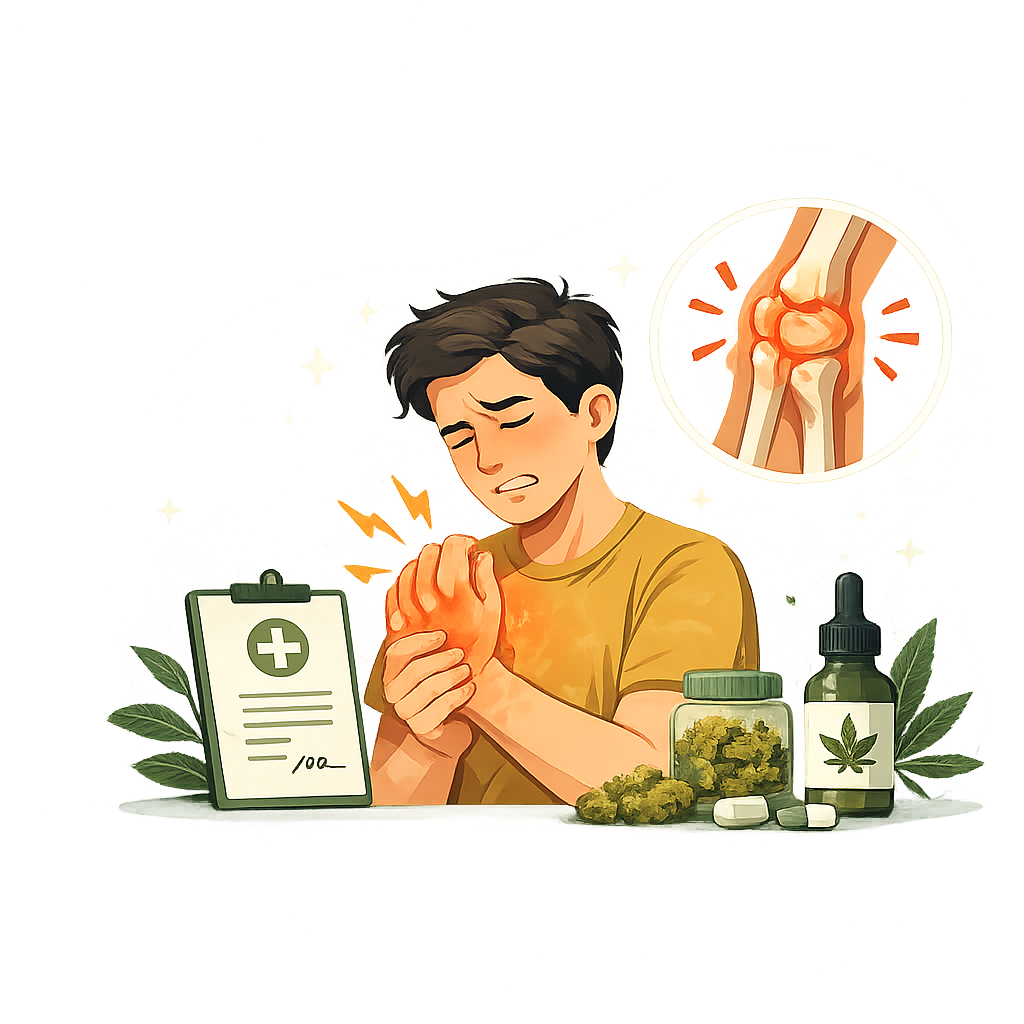
Understanding the Different Types of Arthritis
Arthritis is not a single disease but an umbrella term for over 100 distinct conditions affecting the joints, connective tissue, and surrounding structures. The two most common forms are:
- Osteoarthritis (OA) – The most prevalent form, caused by progressive wear and breakdown of joint cartilage. Most common in the knees, hips, hands, and spine. Risk increases with age, obesity, and prior joint injury.
- Rheumatoid arthritis (RA) – An autoimmune disease in which the immune system attacks the synovial lining of the joints, causing chronic inflammation, joint damage, and systemic symptoms. Can affect people of any age.
Other significant forms include psoriatic arthritis (linked to the skin condition psoriasis), gout (caused by uric acid crystal deposits in joints), ankylosing spondylitis (a form affecting the spine and sacroiliac joints), and juvenile arthritis (affecting children).
While the underlying causes differ, arthritis broadly produces joint pain, stiffness, swelling, warmth, and reduced range of motion. For severe cases, arthritis significantly impairs mobility, employment, sleep, and quality of life.
How Cannabis Interacts with Arthritis Pathology
The endocannabinoid system (ECS) plays a substantial role in regulating both pain perception and inflammatory processes, two central features of arthritis. The ECS consists of endocannabinoids (naturally produced by the body), their receptors (CB1 and CB2), and the enzymes that break them down.
CB1 receptors are distributed throughout the central nervous system and play a major role in pain modulation. CB2 receptors are predominantly found in immune cells and peripheral tissues, including joint tissue, and are heavily involved in regulating inflammation. When cannabis compounds bind to or modulate these receptors, they can interrupt the inflammatory signaling cascades and pain pathways that drive arthritis symptoms.
Specifically, CBD and THC influence several mechanisms relevant to arthritis:
- Suppression of pro-inflammatory cytokines including TNF-alpha, IL-6, and IL-1 beta, which are central mediators of rheumatoid arthritis
- Activation of CB2 receptors in synovial tissue to reduce local immune-driven inflammation
- Modulation of pain signaling pathways in the spinal cord and brain via CB1 activation
- Antioxidant effects that may help protect cartilage from oxidative damage
- Muscle relaxant properties that can ease the spasm and guarding that often accompany joint pain
We Have a 99% Approval Rate
Scientific Evidence Supporting Cannabis for Arthritis
Research on cannabis and arthritis has accelerated considerably in recent years, driven by patient demand and evolving regulatory frameworks. Key findings include:
A preclinical study published in the Proceedings of the National Academy of Sciences demonstrated that CBD significantly reduced joint inflammation and prevented nerve damage in a rat model of arthritis. This research identified CB1 and CB2 receptor-dependent mechanisms responsible for CBD’s anti-arthritic effects in animal tissue.
A 2006 randomized controlled trial published in the journal Rheumatology examined a cannabis-based medicine (Sativex, a CBD:THC oromucosal spray) in patients with rheumatoid arthritis. The trial found statistically significant improvements in pain on movement, pain at rest, sleep quality, and a disease activity score compared to placebo, with generally well-tolerated side effects.
A 2022 cross-sectional survey published in Cannabis and Cannabinoid Research found that among patients with arthritis who used medical cannabis, over 80% reported reductions in pain and more than 65% reported reductions in conventional medication use, including opioids and NSAIDs.
The Arthritis Foundation conducted a survey of more than 2,600 people with arthritis and found that 79% currently used, had previously used, or were considering using CBD for arthritis symptoms. Among those who had used CBD, the majority reported improvements in physical function, sleep, and pain.
Cannabis and Specific Forms of Arthritis
Osteoarthritis
OA is characterized by progressive cartilage degradation and the development of central sensitization, where the nervous system amplifies pain signals. Cannabis may address both the peripheral inflammatory component and the central sensitization aspect of OA pain. Topical CBD products are particularly popular for OA affecting the hands and knees, allowing targeted relief without systemic effects.
Rheumatoid Arthritis
Because RA is an autoimmune condition, the immune-modulating properties of cannabinoids, particularly CBD’s ability to suppress certain inflammatory cytokines, are especially relevant. Cannabis may complement disease-modifying antirheumatic drugs (DMARDs) by addressing symptoms not fully controlled by those medications.
Psoriatic Arthritis
Cannabis has shown potential in reducing both the skin and joint manifestations of psoriatic arthritis. CBD’s anti-inflammatory and immunomodulatory properties may address both the dermatological and musculoskeletal components simultaneously.
Which States List Arthritis as a Qualifying Condition?
Arthritis, and the pain and inflammation it causes, is recognized as a qualifying condition in many state medical marijuana programs. Coverage varies in its specificity. Some states list arthritis directly, while others cover it under broader chronic pain or inflammatory condition categories. States where arthritis patients commonly qualify include:
Arizona, Arkansas, California, Colorado, Connecticut, Delaware, Florida (severe arthritis), Illinois, Louisiana, Maryland, Michigan, Minnesota, Missouri, Nevada, New Jersey, New Mexico, New York, North Dakota, Ohio, Oklahoma, Oregon, Pennsylvania, Rhode Island, Utah, Virginia, Washington, and Washington D.C.
In states without a specific arthritis listing, patients with severe osteoarthritis or rheumatoid arthritis often qualify under provisions for chronic pain, inflammatory conditions, or debilitating medical conditions that cause severe pain. Our physicians at Elevate Holistics are well-versed in each state’s specific language and can advise you accurately.
Medical Cannabis Options for Arthritis Patients
The diversity of medical cannabis products available today means arthritis patients can choose formulations that suit their lifestyle, severity of symptoms, and comfort level with cannabis:
- Topicals – Creams, balms, and salves applied directly to affected joints. Ideal for localized OA of the hands, knees, or feet. No psychoactive effects.
- Tinctures and oils – Sublingual administration for fast, measurable dosing. Suitable for systemic inflammation and pain.
- Capsules and edibles – Longer-lasting effects, good for overnight pain and sleep disruption. Effects take longer to onset.
- Vaporization – Fast onset, useful for breakthrough pain during flares. Avoids combustion byproducts associated with smoking.
Start Your Path to Relief Today
Arthritis should not define your daily life. Medical cannabis offers a legal, physician-supervised path to meaningful pain and inflammation relief for millions of Americans. At Elevate Holistics, our licensed doctors specialize in helping arthritis patients access medical marijuana quickly, affordably, and without the hassle of an in-person office visit.
Your appointment is online. Your doctor is licensed. If you are not approved, you pay nothing. Book your appointment today and take control of your arthritis management.
Get Approved for Medical Marijuana Treatment
Frequently Asked Questions About Medical Marijuana and Arthritis
Does arthritis qualify for a medical marijuana card?
Arthritis qualifies for a medical marijuana card in many U.S. states, though coverage varies by state and type. States that list arthritis, chronic pain, or inflammatory joint conditions as qualifying conditions include Arizona, California, Colorado, Connecticut, Illinois, Maryland, Michigan, Missouri, Nevada, New Jersey, New Mexico, New York, Ohio, Oklahoma, Pennsylvania, and others. Rheumatoid arthritis, which is an autoimmune condition, tends to qualify in more states due to its severe, systemic nature.
Does medical marijuana help arthritis pain?
Research suggests that cannabinoids can reduce arthritis-related pain and inflammation through their effects on the endocannabinoid system. Survey data from arthritis patient populations who use medical cannabis consistently shows improvements in pain, sleep, and physical function.
Is CBD or THC better for arthritis?
Both CBD and THC have anti-inflammatory and analgesic properties relevant to arthritis. CBD is generally preferred for daytime use due to its non-intoxicating nature. THC is effective for pain relief, particularly for nighttime use. Many patients find that a balanced CBD:THC ratio or a combination product works best.
Can I get a medical card for osteoarthritis specifically?
Osteoarthritis may qualify under chronic pain provisions even in states that do not specifically name osteoarthritis. Many state programs include language covering chronic pain or debilitating conditions causing severe pain, which severe osteoarthritis can satisfy. Our physicians can evaluate your specific situation and state's requirements.
Are there topical cannabis options for arthritis?
Yes. Topical cannabis products such as creams, balms, and salves are a popular option for arthritis patients because they can be applied directly to affected joints without producing systemic psychoactive effects. They are available at most medical cannabis dispensaries and can be used alongside oral formulations.