

Table of Contents
ToggleTL;DR: THCP is a naturally occurring cannabinoid discovered in 2019 that binds to CB1 receptors 33 times more effectively than Delta-9 THC, producing significantly stronger psychoactive effects even at lower doses.
What Is THCP?
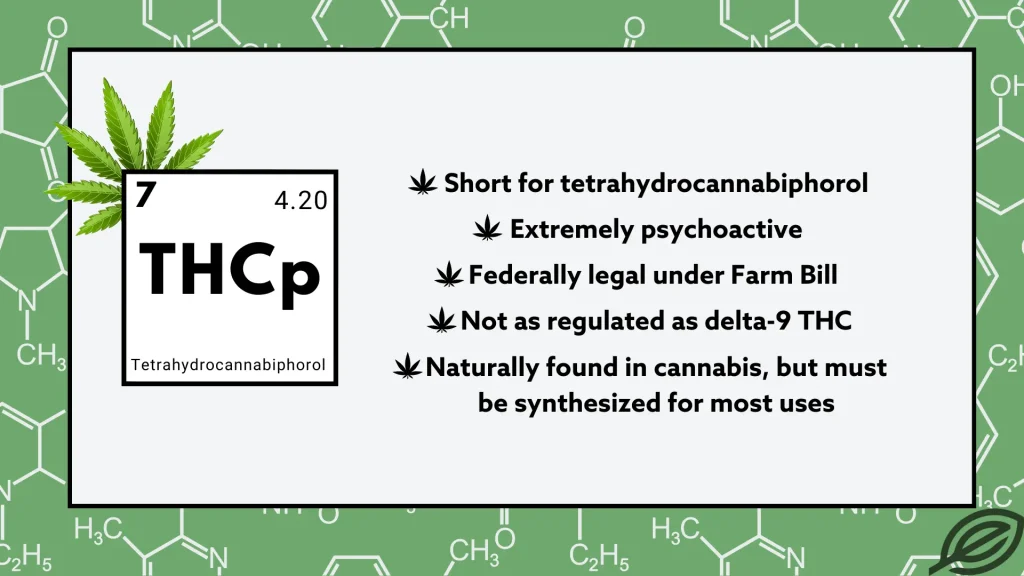
THCP (tetrahydrocannabiphorol) is a rare cannabinoid found naturally in cannabis plants that produces potent psychoactive effects similar to THC, but considerably stronger. Italian researchers discovered it in 2019 while analyzing a specific strain of cannabis using advanced liquid chromatography techniques.
The cannabinoid has a unique molecular structure with a seven-link alkyl side chain, compared to THC’s five-link chain. This longer chain allows THCP to bind more effectively to cannabinoid receptors in your endocannabinoid system, particularly the CB1 receptors responsible for the “high” associated with cannabis.
While THCP occurs naturally in cannabis, it’s typically found in extremely small concentrations (often less than 0.1% of the plant’s total cannabinoid content). Most THCP products available today contain synthesized or hemp-derived versions created through chemical conversion processes.
Interested in exploring cannabinoids through legal medical cannabis? Get your medical marijuana card online with Elevate Holistics and access regulated, lab-tested products in your state.
Key Insights About THCP
Before diving deeper into THCP, here are the most important things you need to know about this powerful cannabinoid:
- Exceptional potency: THCP binds to CB1 receptors 33 times more effectively than Delta-9 THC, though real-world effects feel approximately 5 to 10 times stronger
- Requires minimal dosing: Start with just 1 to 2mg if you’re new to THCP, compared to typical 10mg THC doses
- Recent discovery: Italian researchers identified THCP in 2019, making it one of the newest cannabinoids studied
- Legal gray area: Hemp-derived THCP exists in regulatory limbo, with legality varying significantly by state
- Shows up on drug tests: THCP metabolizes similarly to THC and will trigger positive results on standard screenings
- Mostly synthetic: Natural THCP exists in trace amounts, so commercial products use CBD conversion processes
- Limited research: Long-term effects remain unknown due to THCP’s recent discovery and lack of clinical trials
- Not for beginners: The intense potency makes THCP best suited for experienced cannabis users with established tolerance
How Was THCP Discovered?
Researchers at the University of Modena and Reggio Emilia in Italy discovered THCP in December 2019 during an analysis of the FM2 cannabis strain. The team used liquid chromatography combined with high-resolution mass spectrometry to identify previously unknown cannabinoids in the plant.
Their groundbreaking study, published in Scientific Reports, revealed that THCP demonstrated remarkable binding affinity to CB1 receptors. In laboratory tests, THCP bound to these receptors approximately 33 times more effectively than Delta-9 THC.
The discovery answered longstanding questions about why certain cannabis strains produced unexpectedly strong effects despite having relatively modest THC levels. Scientists now believe THCP’s presence, even in trace amounts, may significantly contribute to a strain’s overall potency and unique effects profile.
How Does THCP Work in the Body?
THCP interacts with your endocannabinoid system by binding to CB1 and CB2 receptors throughout your body. CB1 receptors are concentrated primarily in your brain and central nervous system, while CB2 receptors are found mainly in your immune system and peripheral tissues.
The seven-carbon alkyl side chain gives THCP a structural advantage over THC. This longer chain fits more snugly into CB1 receptor binding sites, creating a stronger and longer-lasting connection. Think of it like a key that fits more perfectly into a lock, allowing it to turn more easily and stay engaged longer.
When THCP binds to CB1 receptors, it triggers similar responses to THC but with greater intensity:
- Altered neurotransmitter release affecting mood, perception, and cognition
- Changes in pain signal processing
- Modifications to appetite regulation
- Impacts on memory formation and recall
- Adjustments to motor control and coordination
The enhanced binding affinity means THCP can produce noticeable effects at much lower doses than THC. However, your individual response depends on factors including your endocannabinoid system’s unique characteristics, tolerance levels, metabolism, and the presence of other cannabinoids and terpenes in the product.
What Are the Effects of THCP?
THCP produces psychoactive effects similar to Delta-9 THC but typically stronger and longer-lasting. Users report intense euphoria, altered sensory perception, and profound relaxation even at lower doses compared to traditional THC products.
Common effects reported by THCP users include:
- Intense euphoria and elevated mood
- Heightened sensory experiences (colors, sounds, textures)
- Deep physical relaxation and body sensation
- Altered time perception
- Increased appetite
- Potential sedation at higher doses
- Enhanced creativity or introspection
The onset and duration vary by consumption method. Inhaled THCP (vaping or smoking) typically takes effect within 5 to 15 minutes and lasts 2 to 4 hours. Edible forms take 30 minutes to 2 hours to kick in but can last 6 to 8 hours or longer.
First-time users frequently underestimate THCP’s potency. Many report that standard THC doses produce overwhelmingly strong effects when applied to THCP. Starting with significantly smaller amounts than you’d use with traditional THC products is essential for a comfortable experience.
Is THCP Stronger Than THC?
THCP is significantly more potent than Delta-9 THC, with research showing it binds to CB1 receptors approximately 33 times more effectively. However, this doesn’t mean THCP produces effects 33 times stronger in practice.
The 33x figure refers to binding affinity, not subjective experience. Real-world potency depends on multiple factors including dose, individual tolerance, product formulation, and the entourage effect from other cannabinoids and terpenes present.
Most experienced users describe THCP as roughly 5 to 10 times more potent than THC in terms of felt effects. This means if you typically consume 10mg of THC, you might achieve similar results with just 1 to 2mg of THCP.
Key differences between THCP and THC potency:
- Dose requirements: THCP requires significantly smaller doses for equivalent effects
- Onset speed: THCP may produce effects slightly faster due to enhanced receptor binding
- Duration: THCP effects typically last longer than equivalent THC experiences
- Intensity ceiling: THCP’s effects plateau at lower doses, but the plateau itself is higher than THC’s
Individual responses vary considerably. Your unique endocannabinoid system, previous cannabis experience, and physiological factors all influence how THCP affects you compared to THC.
THCP vs. Other Cannabinoids: How Do They Compare?
THCP stands out among cannabinoids for its exceptional potency, but understanding how it compares to other popular options helps you make informed choices.
Cannabinoid | Psychoactive | Relative Potency | Legal Status | Common Effects |
THCP | Yes (Strong) | 33x binding affinity vs. THC | Gray area, varies by state | Intense euphoria, deep relaxation, strong body effects |
Delta-9 THC | Yes | Baseline (1x) | Legal in some states, federally controlled | Euphoria, relaxation, altered perception, creativity |
Delta-8 THC | Yes (Mild) | ~50-70% of Delta-9 | Legal under 2018 Farm Bill (some state restrictions) | Milder high, clear-headed, less anxiety |
THC-O | Yes (Very Strong) | ~3x stronger than Delta-9 | Federally banned (2023) | Intense, spiritual, delayed onset |
HHC | Yes (Moderate) | ~70-80% of Delta-9 | Legal in most states | Relaxation, mild euphoria, longer shelf life |
CBD | No | Non-intoxicating | Federally legal | Relaxation, pain relief, no high |
THCP’s enhanced potency comes with trade-offs. While it delivers powerful effects at lower doses, it also increases the risk of adverse reactions if you consume too much. Delta-8 THC and HHC offer gentler alternatives for those seeking milder experiences, while CBD provides therapeutic benefits without any psychoactive effects.
What Are the Potential Benefits of THCP?
THCP shows promise for several therapeutic applications, though research remains limited. The cannabinoid’s strong CB1 receptor binding suggests it may offer enhanced versions of benefits associated with traditional THC.
Potential therapeutic benefits currently being explored include:
- Pain management: THCP’s potent CB1 activation may provide superior relief for chronic pain conditions, requiring lower doses than THC
- Sleep support: The cannabinoid’s sedative properties at moderate to high doses may help with insomnia and sleep quality
- Appetite stimulation: Strong CB1 binding can trigger robust appetite responses, potentially benefiting those with eating disorders or undergoing chemotherapy
- Nausea reduction: Like THC, THCP may help reduce nausea and vomiting, particularly in medical contexts
- Anxiety relief: At carefully controlled low doses, THCP may provide relaxation benefits, though higher doses could increase anxiety
- Neuroprotection: Early research suggests cannabinoids with strong CB1 activity may offer neuroprotective properties
Important caveats exist. Most evidence for THCP’s benefits comes from anecdotal reports and extrapolation from THC research. No large-scale clinical trials have specifically investigated THCP’s therapeutic applications. The cannabinoid’s potency means therapeutic windows may be narrower, requiring precise dosing to achieve benefits without adverse effects.
If you’re considering THCP for medical purposes, consult with a healthcare provider experienced in cannabinoid therapy. They can help you determine appropriate dosing and monitor for potential interactions with existing medications or conditions.
What Are the Side Effects and Risks of THCP?
THCP carries similar side effects to THC but with greater intensity due to its enhanced potency. Taking too much THCP can lead to uncomfortable or potentially distressing experiences that last several hours.
Common side effects reported with THCP use:
- Dry mouth and increased thirst
- Red or bloodshot eyes
- Increased heart rate
- Dizziness or lightheadedness
- Impaired coordination and motor skills
- Short-term memory disruption
- Anxiety or paranoia (especially at higher doses)
- Drowsiness or sedation
More serious risks and considerations include:
- Overconsumption: THCP’s potency makes it easy to take too much, leading to intense anxiety, paranoia, or panic attacks
- Impaired judgment: Strong psychoactive effects can significantly affect decision-making and reaction times
- Drug interactions: THCP may interact with medications metabolized by the same liver enzymes (CYP450 system)
- Mental health concerns: People with schizophrenia, psychosis, or severe anxiety disorders should avoid THCP
- Pregnancy and breastfeeding: Cannabinoids can affect fetal development and pass through breast milk
- Dependency potential: Regular use may lead to tolerance and psychological dependence
THCP will show up on standard drug tests that screen for THC metabolites. The cannabinoid breaks down into similar compounds that trigger positive results. If you’re subject to drug testing for employment or legal reasons, avoid THCP entirely.
Long-term effects remain unknown. Since THCP’s discovery is recent and human studies are limited, we don’t fully understand potential risks from extended or frequent use.
Is THCP Legal?
THCP exists in a legal gray area in the United States. The cannabinoid’s legality depends on its source (hemp vs. marijuana) and your specific state laws, creating a complex and evolving regulatory landscape.
Under the 2018 Farm Bill, hemp-derived cannabinoids containing less than 0.3% Delta-9 THC are federally legal. Many THCP products sold online claim hemp-derived status, positioning themselves as legal under this framework. However, the DEA has signaled that synthetically derived cannabinoids may be considered controlled substances regardless of their source material.
State-level regulations vary dramatically:
- Permissive states: Some states allow hemp-derived THCP sales with minimal restrictions
- Restrictive states: Others have explicitly banned THCP or all THC analogs, including hemp-derived versions
- Medical-only states: A few states may permit THCP only within regulated medical cannabis programs
- Evolving legislation: Many states are actively reviewing and updating cannabinoid laws
States with known restrictions or bans on THCP or similar hemp-derived cannabinoids include Alaska, Arizona, Arkansas, Colorado, Delaware, Idaho, Iowa, Mississippi, Montana, New York, Rhode Island, and Utah. This list changes frequently as new legislation passes.
The legal uncertainty creates risks. Purchasing or possessing THCP could potentially violate state or federal laws depending on how authorities interpret existing regulations. Products marketed as “legal” may not actually comply with all applicable laws.
Before purchasing or using THCP, research your specific state’s current laws. When traveling, remember that cannabinoid laws vary between states and that federal property (airports, national parks) follows federal regulations regardless of state laws.
How Is THCP Made: Natural vs. Synthetic
THCP occurs naturally in cannabis plants, but extraction from plant material is impractical due to extremely low concentrations. Most THCP products available today use synthetic conversion processes starting with hemp-derived CBD or other cannabinoids.
Natural THCP: Cannabis plants produce tiny amounts of THCP through their natural biosynthesis processes, typically less than 0.1% of total cannabinoid content. Extracting meaningful quantities would require processing enormous amounts of plant material, making it economically unfeasible for commercial production.
Synthetic THCP production: Manufacturers create THCP through chemical conversion processes that transform CBD (legal and abundant in hemp) into THCP. This typically involves:
- Extracting CBD from hemp plants
- Using chemical catalysts and reactions to modify CBD’s molecular structure
- Converting CBD into THCP through cyclization and side-chain elongation
- Purifying the resulting THCP compound
- Testing for purity and potency
The quality and safety of synthetic THCP depends entirely on manufacturing practices. Reputable producers use pharmaceutical-grade processes, thoroughly test finished products, and remove residual solvents or contaminants. Less scrupulous manufacturers may cut corners, leaving potentially harmful chemical residues.
When choosing THCP products, look for:
- Third-party lab testing certificates (COAs)
- Clear labeling of THCP content and other ingredients
- Transparent manufacturing information
- Testing for heavy metals, pesticides, and residual solvents
- Batch-specific test results you can verify
The synthetic nature doesn’t make THCP less effective or inherently dangerous, but it does mean product quality varies significantly between manufacturers. Always purchase from established brands with robust testing protocols.
Where Can You Find THCP Products?
THCP products are available through various channels, though availability depends on your location and local regulations. The market has expanded rapidly, offering multiple consumption methods to suit different preferences.
Where to buy:
- Online retailers: Numerous websites ship hemp-derived THCP products to most states, offering the widest selection and competitive pricing
- Hemp and CBD shops: Local stores specializing in hemp products increasingly stock THCP items
- Vape shops: Many carry THCP vape cartridges and disposables
- Some smoke shops: Depending on local regulations, smoke shops may sell THCP products
- Dispensaries: In states with legal cannabis markets, some dispensaries carry THCP products
Common product formats:
- Vape cartridges and disposables: Most popular format, offering fast onset and precise dosing
- Gummies and edibles: Convenient and discreet, with longer-lasting effects
- Tinctures: Sublingual drops providing flexible dosing and moderate onset time
- Flower: Hemp flower sprayed with THCP distillate for smoking
- Concentrates: High-potency THCP wax, diamonds, or distillate for experienced users
Product selection tips:
- Verify the vendor’s reputation through reviews and industry recognition
- Confirm they provide accessible third-party lab results
- Check that products clearly list THCP content in milligrams
- Ensure they ship to your state and comply with local laws
- Look for clear return and customer service policies
- Start with lower-potency products if you’re new to THCP
Avoid products with suspiciously low prices, no lab testing, vague ingredient lists, or unrealistic marketing claims. Quality THCP products require proper extraction and testing, which costs money. If prices seem too good to be true, the product may be impure, mislabeled, or unsafe.
Interested in exploring cannabinoids through legal medical cannabis? Get your medical marijuana card online with Elevate Holistics and access regulated, lab-tested products in your state.
How to Use THCP Safely: Tips for Beginners
THCP’s exceptional potency requires a cautious approach, especially if you’re new to the cannabinoid or have limited cannabis experience. Following these guidelines helps ensure a positive and safe experience.
Start extremely low: If you typically use 10mg of THC, start with just 1 to 2mg of THCP. The potency difference is substantial, and you can always take more later if needed. You cannot undo taking too much.
Beginner dosing guidelines:
- First time: 1 to 2mg maximum
- Wait 2 hours minimum before considering additional doses (especially with edibles)
- Increase gradually: Add only 0.5 to 1mg increments in future sessions
- Track your doses: Keep notes on amounts and effects to find your optimal dose
Choose the right environment:
- Use THCP in a safe, comfortable setting for your first several experiences
- Have trusted friends present if desired
- Clear your schedule with no obligations for several hours
- Avoid driving or operating machinery after use
Preparation tips:
- Have water, snacks, and entertainment readily available
- Keep CBD on hand (it can help counteract excessive THC effects)
- Stay hydrated before, during, and after use
- Avoid mixing with alcohol or other substances initially
If you take too much:
- Remember that THCP is not dangerous and the effects will pass
- Move to a calm, quiet space
- Focus on slow, deep breathing
- Drink water and try eating something
- Consider taking CBD if available (may reduce intensity)
- Use grounding techniques: name objects you see, feel textures around you
- Rest or sleep if possible
Don’t use THCP if you have a personal or family history of psychosis, severe anxiety disorders, heart conditions, or are pregnant or breastfeeding. Consult your healthcare provider if you’re taking medications, as THCP may interact with drugs metabolized by liver enzymes.
Build tolerance gradually if you plan to use THCP regularly. Start with infrequent use (once or twice weekly maximum) to gauge your response before increasing frequency.
The Bottom Line: Should You Try THCP?
THCP offers an exceptionally potent cannabinoid experience for those seeking stronger effects than traditional THC provides. However, its intense potency demands respect, careful dosing, and an understanding of your own tolerance and comfort level with psychoactive substances.
THCP may be right for you if you are an experienced cannabis user seeking more potent effects, someone who has built tolerance to standard THC products, interested in exploring novel cannabinoids responsibly, or looking for potentially stronger therapeutic effects at lower doses with medical guidance.
THCP may not be appropriate if you are new to cannabis or cannabinoids, have low tolerance to psychoactive substances, prone to anxiety or paranoia with THC, subject to drug testing, have cardiovascular or mental health concerns, or living in states with restrictive cannabinoid laws.
The legal ambiguity surrounding THCP adds complexity to the decision. While hemp-derived THCP occupies a gray area under federal law, state regulations vary widely and continue evolving. Product quality also varies dramatically between manufacturers, making vendor selection critical for safety.
If you decide to try THCP, prioritize safety through low starting doses, verified lab testing, appropriate setting, and gradual experimentation. Treat this cannabinoid with the respect its potency demands, and never underestimate how small amounts can produce significant effects.
For those seeking cannabinoid experiences without THCP’s intensity, alternatives like Delta-8 THC, HHC, or standard CBD products may better suit your needs. There’s no requirement to try the most potent option available, and choosing cannabinoids matched to your experience level and goals produces the best outcomes.
Skip the legal gray area. Get your medical marijuana card with Elevate Holistics and access state-licensed dispensaries offering tested, regulated cannabinoid products.
Frequently Asked Questions About THCP
Does THCP get you high?
Yes, THCP gets you high and produces significantly stronger psychoactive effects than Delta-9 THC. THCP binds to CB1 receptors in your brain approximately 33 times more effectively than regular THC, resulting in intense euphoria, altered perception, and deep relaxation even at low doses. The high from THCP is similar in character to THC but considerably more potent, making it essential to start with very small amounts.
Is THCP synthetic?
Most THCP products contain synthetic THCP, though the cannabinoid does occur naturally in cannabis plants. Natural THCP exists in extremely small concentrations (typically less than 0.1%), making extraction impractical. Manufacturers create THCP through chemical conversion of hemp-derived CBD, producing a molecularly identical compound. Quality synthetic THCP is safe when properly manufactured and tested, but always verify third-party lab results before purchasing.
Is THCP safe?
THCP is relatively safe for healthy adults when sourced from reputable manufacturers and used at appropriate doses, but its exceptional potency increases risks if you take too much. Common side effects include anxiety, paranoia, rapid heart rate, and impaired coordination. Long-term safety data doesn’t exist since THCP was only discovered in 2019. People with heart conditions, mental health disorders, or who are pregnant should avoid THCP entirely, and anyone subject to drug testing should not use it.
How strong is THCP?
THCP is extremely strong, binding to CB1 receptors approximately 33 times more effectively than Delta-9 THC. In practical terms, most users report THCP feels 5 to 10 times more potent than regular THC, meaning 1 to 2mg of THCP can produce effects similar to 10mg of THC. The enhanced strength requires careful dosing, especially for first-time users who should start with no more than 1 to 2mg total.
Is THCP stronger than THCA?
Yes, THCP is significantly stronger than THCA in terms of psychoactive effects. THCA (tetrahydrocannabinolic acid) is non-intoxicating until it’s heated and converts to Delta-9 THC. Once converted, THCP remains far more potent than the resulting THC, with binding affinity approximately 33 times greater. However, raw THCA offers different therapeutic benefits without the high, making them useful for different purposes rather than directly comparable.
What's the difference between THCA and THCP?
The main difference between THCA and THCP is that THCA is non-psychoactive while THCP produces intense intoxication. THCA is the acidic precursor to THC found in raw cannabis that converts to Delta-9 THC when heated. THCP is a distinct cannabinoid with a seven-carbon side chain that binds much more strongly to CB1 receptors. THCA is used for anti-inflammatory and neuroprotective benefits without getting high, while THCP is sought specifically for its powerful psychoactive effects.
How long does THCP stay in your system?
THCP stays in your system for similar durations as Delta-9 THC, typically detectable in urine for 3 to 30 days depending on usage frequency. Occasional users may test positive for 3 to 7 days, regular users for 10 to 15 days, and heavy daily users for 30 days or longer. THCP metabolizes into compounds similar to THC metabolites, so standard drug tests cannot distinguish between THCP and marijuana use. Blood tests detect it for 1 to 2 days, while hair tests can show use for up to 90 days.
Is THCP legal in Florida?
THCP legality in Florida is unclear, as the state has not explicitly addressed THCP in legislation. Hemp-derived products with less than 0.3% Delta-9 THC are generally legal under Florida’s hemp program, which could include THCP. However, Florida has banned some synthetic cannabinoids, and interpretations vary. Before purchasing or possessing THCP in Florida, research current state regulations or consult with a legal professional, as enforcement and legislative status may have changed.
Is THCP legal in Texas?
THCP legality in Texas exists in a gray area. Texas allows hemp-derived cannabinoids under the 2019 Texas Hemp Law, provided products contain less than 0.3% Delta-9 THC. Many retailers sell THCP products in Texas under this framework. However, Texas has restricted certain synthetic cannabinoids, and law enforcement interpretation varies by jurisdiction. The legal landscape changes frequently, so verify current Texas laws and local ordinances before purchasing or using THCP products in the state.
Is THCP legal in Georgia?
THCP legal status in Georgia is ambiguous. Georgia permits hemp-derived products containing less than 0.3% Delta-9 THC under its hemp farming program, which technically could include THCP. However, Georgia has not specifically addressed THCP in legislation, and the state has taken enforcement action against some hemp-derived cannabinoids. Given the uncertain legal environment, research Georgia’s current cannabinoid regulations or consult a legal expert before purchasing or possessing THCP in the state.