

While most people know THC gets you high and CBD doesn’t, THCV operates on an entirely different playbook – one that changes based on how much you take.
I’ve spent years helping patients choose the right cannabis products for their needs, and THCV consistently confuses more people than any other compound. You’ll see it marketed for appetite control, then turn around and find someone claiming it increases hunger. You’ll read about its energizing effects, then discover warnings about mild psychoactivity. The contradictions aren’t mistakes. They’re actually the point.
THCV (tetrahydrocannabivarin) is a cannabinoid that shifts its personality depending on the dose. Take a little, and it might block certain effects. Take more, and it activates them. This biphasic behavior makes it one of the most interesting compounds in cannabis and one of the trickiest to use correctly if you don’t know what you’re doing.
THCV vs THC – Key Differences
The name looks almost identical, but the two cannabinoids work very differently in the body. This is the comparison that matters most for understanding why THCV has attracted so much research attention.
- Appetite: THC stimulates appetite (the munchies). THCV, at low doses, blocks CB1 receptors and suppresses hunger.
- Psychoactivity: THC is psychoactive at standard doses. THCV is non-psychoactive at low doses; higher doses can produce a shorter, more energetic effect.
- Duration: THC highs typically last 2-3 hours. THCV-induced effects, when they occur at high doses, tend to be shorter and more stimulating.
- Blood sugar: THC has mixed effects on blood sugar. THCV shows promise in human studies for improving insulin sensitivity and reducing fasting glucose.
- Availability: THC is present in virtually all cannabis products. THCV is only found in meaningful concentrations in specific strains, primarily African sativas.
- Boiling point: THC vaporizes at 315°F. THCV requires 428°F – if you’re vaping THCV, turn up the temperature.
THCV Isn’t THC’s Cousin: It’s More Like Its Contrarian Twin
Here’s where most articles get THCV wrong. They compare it to THC because the names sound similar. But chemically and functionally, THCV behaves more like an antagonist to THC at lower doses, then flips to become THC-like at higher amounts.
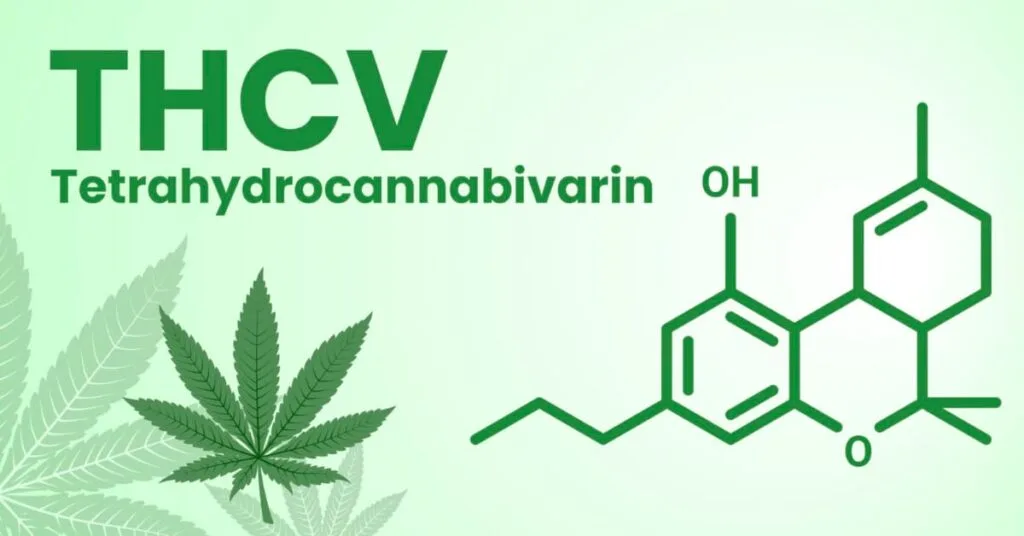
The molecular structure matters here. THCV has a three-carbon side chain instead of THC’s five-carbon chain. That small difference changes how it interacts with your CB1 and CB2 receptors the main receptors in your endocannabinoid system. At doses below 10mg, THCV can actually block CB1 receptors, potentially reducing appetite and some psychoactive effects. Above that threshold, it starts activating those same receptors, producing mild euphoria and altered perception.
A 2025 review made this point explicit. Researchers examined all available human studies and concluded that THCV and THC should not be grouped together from a regulatory standpoint. The compounds behave too differently. While 10mg of THC produces clear intoxication in most people, 10mg of THCV produces no psychoactive effects. Only at doses of 100-200mg does THCV show THC-like effects and even then, the intensity is significantly lower.
This isn’t theoretical. It’s why the same compound shows up in products marketed for weight management and products designed for recreational effects. The dose determines the destination.
The Research on THCV Is Promising but Growing
Let me be direct about what we know and what we’re still learning. Most THCV research has been conducted on animals or in test tubes, not on humans walking into dispensaries. But the human studies that do exist particularly those published in the last few years show interesting possibilities that go beyond early animal research.
A 2025 study published in Cannabis journal examined 44 adults with metabolic syndrome who took THCV/CBD oral strips daily for 90 days. The higher dose group (16mg THCV with 20mg CBD) showed statistically significant weight loss, decreased abdominal girth, lower systolic blood pressure, and improved cholesterol levels compared to placebo. The lower dose (8mg THCV with 10mg CBD) also produced weight loss, but the higher dose proved more effective. These weren’t trivial changes – participants saw real metabolic improvements over three months.
The 2016 study in Diabetes Care found that THCV improved insulin sensitivity and fasting glucose levels in people with type 2 diabetes. Participants took 5mg of THCV twice daily for 13 weeks. Fasting plasma glucose dropped from 7.4 to 6.7 mmol/L in the THCV group while the placebo group’s glucose increased from 7.6 to 8.0 mmol/L. THCV also improved pancreatic beta-cell function significantly. That’s meaningful data showing real metabolic effects in humans.
Research on appetite from preclinical studies shows THCV reduces food intake at doses that block CB1 receptors. The mechanism involves suppressing hunger signals in the hypothalamus and reducing reward responses to food. Multiple rodent studies demonstrate this effect consistently. But here’s the catch when researchers increased the dose significantly, those appetite-suppressing effects diminished or reversed, supporting the biphasic nature of the compound.
A 2016 study in Journal of Psychopharmacology looked at THCV combined with THC in healthy male volunteers. Participants took 10mg THCV daily for five days, then received THC on the fifth day. THCV didn’t produce psychoactive effects on its own at this dose, but it did inhibit some of THC’s effects including reducing THC-induced increases in heart rate and making the THC high feel subjectively weaker to participants.
These studies matter because they point toward real therapeutic potential with actual human data, not just animal models. They also remind us that THCV research is still developing. We don’t have decades of human trials like we do with THC. We don’t have standardized dosing protocols. What we have are early indicators that warrant attention and careful experimentation.
How THCV Compares to THC and CBD: The Contrast You Need to Choose Correctly
Understanding THCV means understanding what it’s not. Most cannabis users have experience with THC or CBD, so let’s use that familiarity to map out where THCV fits.
THCV vs THC – THC activates CB1 receptors directly, producing the classic cannabis high. It increases appetite (hello, munchies), can heighten anxiety in some users, and affects short-term memory. THCV at low doses blocks those same CB1 receptors, potentially reducing appetite and producing clear-headed alertness without significant intoxication. At higher doses (100mg+), THCV mimics THC but with shorter duration and less intensity. The high comes on faster and fades quicker, typically lasting 2-3 hours versus THC’s 4-6 hours.
THCV vs CBD – CBD doesn’t bind strongly to CB1 or CB2 receptors. Instead, it modulates them indirectly and interacts with other receptor systems entirely. It’s non-intoxicating at any dose and works well for inflammation, anxiety, and sleep without psychoactivity. THCV does bind to CB receptors it just does so differently depending on concentration. At low doses, it might share CBD’s non-intoxicating profile. At high doses, it becomes mildly psychoactive in ways CBD never does.
The practical difference? If you want consistent non-intoxicating effects, CBD is more predictable. If you want something that might suppress appetite or provide energy without a strong high, low-dose THCV might work better. If you’re curious about mild psychoactivity with clearer cognition than THC provides, higher-dose THCV could be interesting.
The Biphasic Profile Explained: How Dosage Makes THCV Two Different Compounds
Let me break down what biphasic actually means in practice, using data from the most recent human studies. It’s not just academic – it affects whether THCV will help or frustrate you.
Low Dose (5-10mg) – At this range, THCV acts as a CB1 antagonist. It blocks or reduces activation of CB1 receptors, which are concentrated in your brain and central nervous system. The 2016 diabetes study used 5mg twice daily and found no psychoactive effects while producing metabolic benefits. The 2025 weight loss study used 8-16mg daily with similar results. This blockage can reduce appetite signals, increase alertness, and potentially counteract some THC effects if you’re using products with both cannabinoids. Psychoactivity is absent at these doses.
Moderate Dose (10-50mg) – This is the transition zone. A 2023 study published in Cannabis and Cannabinoid Research tested doses ranging from 12.5mg to 200mg in healthy adults. At 25mg, participants reported feeling more energetic at 1-4 hours post-dose, though the effect didn’t reach statistical significance compared to placebo. The 50mg dose showed improved sustained attention on cognitive tests but no significant psychoactive effects reported. Your individual endocannabinoid system, body weight, and tolerance influence where you land in this range.
High Dose (100mg+) – This is where THCV shifts from antagonist to agonist, meaning it starts activating CB1 receptors instead of blocking them. The 2023 study found that 100mg and 200mg doses produced the most common side effect: euphoric mood. Participants at these doses reported feeling “a drug effect” and “liking the drug effect.” However, the psychoactivity was notably milder than typical THC doses. The high typically lasts 2-3 hours total – significantly shorter than THC. Mental clarity tends to stay more intact. Some users describe it as a “cleaner” or “more energetic” high compared to THC.
This dose-dependent behavior explains why THCV products need clear labeling and why starting low matters more than with CBD or even THC. With CBD, taking 10mg versus 30mg might just mean stronger anti-inflammatory effects. With THCV, jumping from 25mg to 100mg could shift you from mild energy to noticeable euphoria.
What the Science Says About Appetite, Blood Sugar, and Mood
The research on THCV clusters around three main areas. Let’s examine what each area actually shows based on the most current studies.
A 2026 review published in Frontiers in Pharmacology examined THCV’s role in metabolic disorders, noting that preclinical studies consistently show improved insulin sensitivity and reduced food intake in animal models.
The review identified THCV’s dual mechanism CB1 antagonism at low doses and partial CB2 agonism as the basis for its metabolic effects. Human trials remain limited but preliminary results on type 2 diabetes patients showed reductions in fasting plasma glucose.
The review noted that larger-scale clinical trials are the next necessary step before THCV can be considered for medical application in weight management or diabetes care.
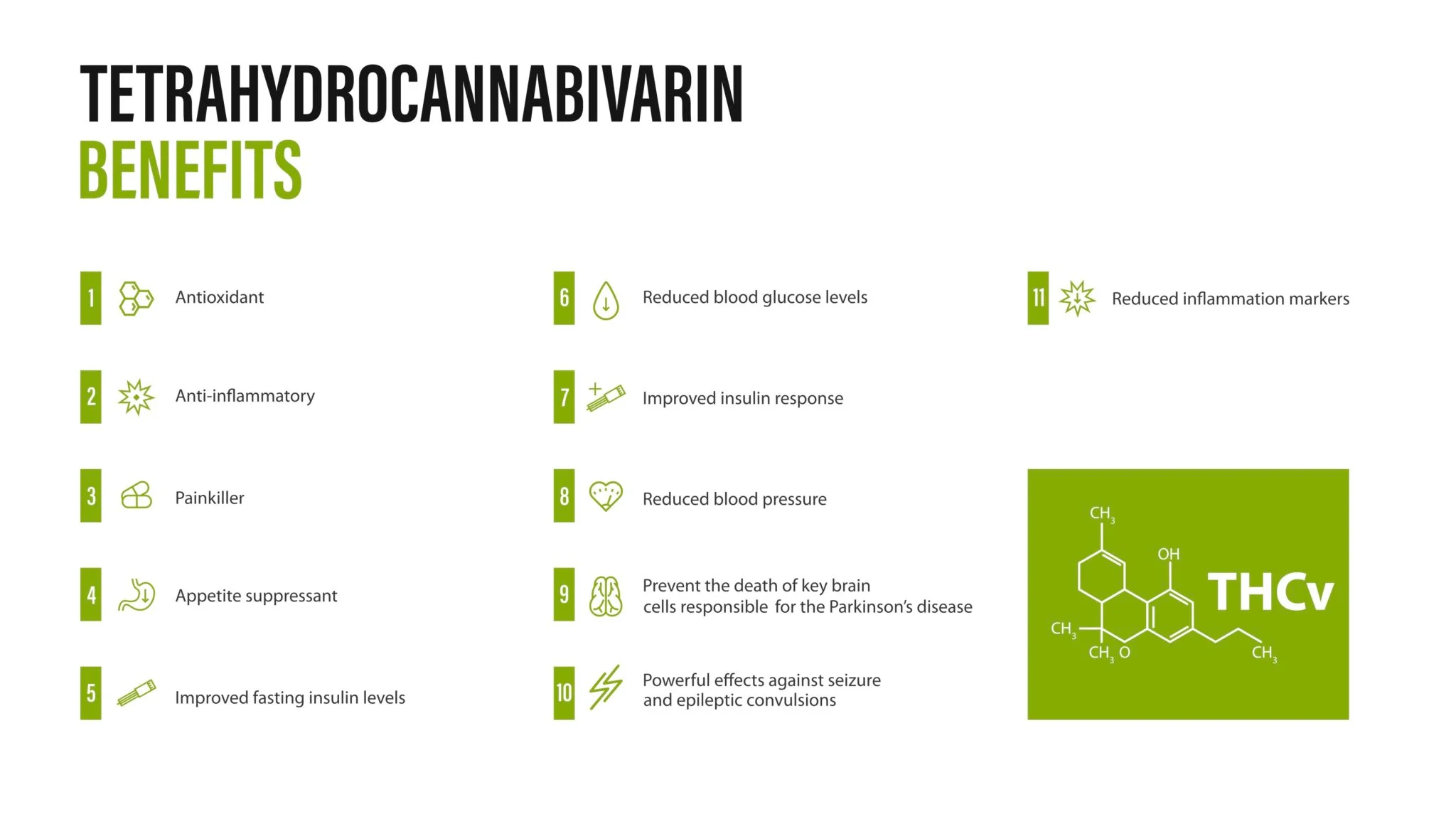
Appetite and Weight Management – The 2025 clinical trial provides the strongest human evidence yet. Adults with metabolic syndrome took THCV/CBD strips daily for 90 days. Results showed statistically significant weight loss and reduced abdominal girth compared to placebo. The mechanism likely involves CB1 receptor blockade in the hypothalamus, which suppresses hunger signals and reduces reward responses to food.
Multiple rodent studies from 2009-2013 demonstrated that THCV decreased body weight gain in mice on high-fat diets. The effect appears dose-dependent low doses suppress appetite, while very high doses may reverse this effect. The 2025 human study used moderate doses (8-16mg daily) and confirmed appetite suppression translates to actual weight loss over time.
The limitation? We still don’t know optimal long-term dosing for weight management. The 90-day study is the longest human trial we have. Individual variation is significant what suppresses appetite for one person might not affect another. THCV isn’t a magic weight loss solution, but it may support efforts by reducing cravings and hunger signals.
Blood Sugar and Metabolic Health – This is where THCV shows the most consistent clinical promise. The 2016 Diabetes Care study found THCV improved fasting glucose, improved pancreatic beta-cell function, and increased insulin sensitivity in people with type 2 diabetes. Participants took 5mg twice daily for 13 weeks. Glucose levels improved by approximately 0.7 mmol/L compared to placebo – a clinically meaningful change.
The 2025 weight loss study found similar metabolic improvements; participants showed decreased systolic blood pressure and improved cholesterol profiles (lower total and LDL cholesterol). These findings suggest THCV could support metabolic health beyond just appetite control. It might influence how your body processes glucose and responds to insulin.
But again, we’re talking about early research with relatively small sample sizes. Nobody’s suggesting you replace diabetes medication with THCV products without medical supervision. The data shows potential as an adjunct therapy, not a replacement for proven treatments.
Mood and Psychoactive Effects – The 2023 dose-ranging study provides our best data on THCV’s subjective effects. At 25mg, some participants felt more energetic, though not to a statistically significant degree. At 100-200mg, euphoric mood became the most common reported effect. Participants described the experience as clear-headed compared to THC cognitive function stayed relatively intact even at doses that produced noticeable euphoria.
The 2016 study examining THCV with THC found that 10mg THCV daily didn’t produce mood changes on its own, but it did modulate THC’s effects – making the THC high feel subjectively weaker and reducing some physiological responses like increased heart rate.
Limited research suggests THCV might have neuroprotective properties and could influence dopamine signaling, which relates to motivation and reward. Studies on Parkinson’s disease symptoms found THCV provided antioxidant effects and reduced inflammation in neural tissue. But these are preliminary findings that need replication in larger trials.
The mood research is encouraging but incomplete. We don’t know long-term effects. We don’t know how THCV interacts with common psychiatric medications. We don’t know if tolerance develops with regular use. The existing evidence suggests THCV affects mood and cognition differently than THC, but we need more research to understand clinical applications.
Which Cannabis Strains Have the Highest THCV?
Most cannabis strains contain trace or undetectable levels of THCV. The cannabinoid is concentrated in African sativa landrace genetics, which is why finding high-THCV strains takes some research. Here are the strains most consistently associated with elevated THCV content:
- Durban Poison: A South African sativa landrace and the most well-known high-THCV strain. Energizing, clear-headed, sweet pine aroma. Widely available in dispensaries across legal states.
- Doug’s Varin: A rare sativa specifically developed for high THCV content – some testing has shown up to 5% THCV. Hard to find, but worth seeking if you can locate it.
- Pink Boost Goddess: Some cultivars have tested at up to 10% THCV, making it one of the strongest THCV strains documented. Sativa-dominant with uplifting, energizing effects.
- Cherry Pie: A hybrid with Durban Poison genetics that can express elevated THCV alongside its sweet, fruity profile. More widely available than Doug’s Varin.
- Jack the Ripper: A sativa-dominant hybrid known for clear-headed, energizing effects and above-average THCV potential.
If you can’t find a specific high-THCV strain, ask your dispensary budtender for strains with African sativa lineage. THCV products – oils, capsules, and some gummies – are increasingly available online from hemp-derived sources in states without medical programs.
Side Effects and Who Should Be Cautious with THCV
Let me tell you what we know about THCV’s safety profile based on recent human trials and who might want to approach it carefully or avoid it entirely.
Reported Side Effects – The 2023 dose-ranging study found that most adverse events (55 out of 60 total) were mild. At low to moderate doses, THCV appears well-tolerated in most people. The studies conducted so far report minimal adverse effects. Here’s what participants experienced:
-
- Euphoric mood – Most common at doses of 100mg and above, not considered negative by most participants
-
- Headache – Second most common side effect, not dose-dependent
-
- Dry mouth – Common with most cannabinoids, usually mild with THCV
-
- Increased heart rate – Can occur at higher doses, similar to THC but typically less pronounced
-
- Mild dizziness – More likely when transitioning from low to moderate doses
-
- Overstimulation – Some people find THCV too energizing, especially when combined with caffeine
The psychoactive effects at higher doses (100mg+) mean THCV could impair driving or operating machinery. The 2023 study noted that while effects were milder than THC, participants still reported feeling “a drug effect” at high doses. Even though the intoxication is generally milder and shorter than THC, impairment is still impairment.
One important note from recent research: THCV products can cause positive urine drug screens for THC. The 2023 study specifically flagged this concern. If you’re subject to drug testing, THCV use could result in a failed test, even though THCV itself has different effects than THC.
Who Should Avoid or Limit THCV – Certain groups should exercise extra caution or avoid THCV products entirely.
-
- Pregnant or breastfeeding – No safety data exists for THCV use during pregnancy or while nursing. Cannabis compounds can cross the placenta and enter breast milk
-
- People with cardiovascular conditions – THCV can increase heart rate, particularly at higher doses. If you have heart disease, arrhythmia, or high blood pressure, talk to your doctor before trying THCV
-
- Those undergoing drug testing – THCV can trigger positive THC tests, potentially affecting employment or legal situations
-
- People taking medications metabolized by cytochrome P450 enzymes – THCV might interact with certain medications, though research is limited
-
- Anyone with a history of cannabis-induced psychosis – Even mild psychoactivity at high doses could be risky
-
- Individuals with eating disorders – Appetite suppression effects could worsen conditions like anorexia
I also want to be clear about something medical professionals sometimes overlook. Just because a compound comes from a plant doesn’t make it universally safe. THCV is pharmacologically active, which means it has real effects on your body. Real effects mean real potential for interactions and adverse reactions in susceptible individuals.
Choosing THCV Products: What to Look For and What to Expect
THCV products are less common than CBD or THC products, but they’re becoming more available. Here’s how to choose wisely and set appropriate expectations based on current research.
Product Types and Concentrations – You’ll find THCV in several forms, each with different practical considerations.
-
- THCV-rich flower strains – African landrace sativas like Durban Poison naturally contain higher THCV (up to 1-2% of total cannabinoid content). You’ll still get significant THC with these strains, so expect psychoactivity. The THCV content adds alertness and energy to the high
-
- THCV isolate or distillate – Concentrated THCV products containing 80-99% THCV. These allow precise dosing and can be added to food, taken sublingually, or vaped. Start with 5mg and increase slowly based on your goals
-
- THCV gummies or edibles – Pre-dosed products make it easy to track intake. Look for products with 5-10mg THCV per serving for metabolic effects, avoid doses above 50mg unless specifically seeking psychoactive effects
-
- THCV/CBD combination products – The 2025 weight loss study used THCV combined with CBD in mucoadhesive oral strips. This combination showed significant metabolic benefits. Many products now combine these cannabinoids
-
- THCV vape cartridges – Faster onset than edibles (5-10 minutes vs 45-90 minutes), shorter duration. Good for testing your response before committing to larger doses
Dosing Guidelines for Beginners – THCV requires more careful dosing than CBD because of its biphasic nature. Here’s my recommended approach based on recent research.
Start with 5-8mg if you want appetite suppression, metabolic support, or focus without psychoactivity. The 2016 diabetes study used 5mg twice daily. The 2025 weight loss study found 8mg daily effective for weight management. Take this dose once or twice daily, preferably in the morning or early afternoon, as THCV can be stimulating. Wait at least 3-5 days before increasing the dose. This gives you time to notice subtle effects that might not be obvious on day one.
If you want to explore mild energizing effects without significant psychoactivity, try 10-25mg as a single dose. The 2023 study found 25mg produced feelings of increased energy in some participants without notable euphoria. This dose range sits in the transition zone – effects vary by individual.
If you’re curious about the mild psychoactive effects, doses of 100mg or higher produce euphoria according to the 2023 research. Never start at high doses, especially if you’re sensitive to THC. The clearer high doesn’t mean no high. And remember, you might fail a drug test even at doses that don’t feel intoxicating.
Lab Testing and Quality – THCV products should come with third-party lab results showing cannabinoid content, absence of pesticides, heavy metals, and microbial contamination. Look for:
-
- Specific THCV content listed in milligrams per serving
-
- Total cannabinoid profile (you want to know what else is in there, especially THC content)
-
- Recent testing dates (within 6-12 months)
-
- Batch numbers matching the product you purchased
-
- Clear indication of whether it’s Δ9-THCV or Δ8-THCV (research primarily uses Δ8 but most natural products contain Δ9)
If a company can’t provide lab results or the results look suspiciously perfect (exactly the same across multiple batches), consider that a red flag.
What to Expect: Setting Realistic Outcomes
Let me set expectations based on what recent studies and users actually report, not what marketing claims promise.
For appetite control and weight loss – The 2025 study showed participants lost statistically significant weight over 90 days using 8-16mg THCV daily. This wasn’t dramatic rapid weight loss; it was steady, sustainable reduction in body weight and abdominal girth. Some people notice reduced food cravings within a week of consistent use. Others notice nothing. THCV isn’t a magic weight loss solution. If it works for you, it might make it easier to stick to calorie goals by reducing hunger signals. That’s valuable but not transformative on its own.
For energy and focus – Low-dose THCV (5-25mg) often provides a clean, alert feeling without jitters. It’s not coffee-level stimulation. Think more like the mental clarity you get from a good night’s sleep. The 2023 study found some doses improved sustained attention on cognitive tests. Some people love it for morning productivity. Others find the effect too subtle to notice.
For blood sugar and metabolic health – If you have diabetes or pre-diabetes, don’t expect THCV to replace medication or eliminate the need for diet changes. The 2016 study showed it improved fasting glucose by about 0.7 mmol/L – meaningful but modest. The research shows it might support metabolic health as part of a broader approach. Track your glucose levels if you try THCV for this purpose, and keep your doctor informed.
For psychoactive effects At 100-200mg, expect mild euphoria, slightly altered perception, and clear-headed stimulation. The 2023 study found effects typically peak within 30-60 minutes (edibles) or 5-10 minutes (inhaled) and last 2-3 hours total. Mental clarity stays more intact than with THC, but you’re still impaired. Don’t drive. And remember you may test positive for THC.
Making the Choice: When THCV Makes Sense
THCV works best for people looking for specific effects that match its unique profile. You might benefit from THCV if you want cannabinoid effects but find THC too intoxicating or anxiety-producing. You might appreciate the appetite control if you’re managing cravings or working on metabolic health goals. You might value the energy and focus without stimulant side effects.
THCV doesn’t make sense if you want deep relaxation or sedation try CBD or CBN instead. It doesn’t make sense if you want strong, long-lasting psychoactivity – THC does that better. It’s also worth noting that if you’re looking for extremely potent psychoactive effects, THCP (tetrahydrocannabiphorol) is significantly stronger than regular THC, though it comes with its own safety considerations and legal complexities that require careful research. It doesn’t make sense if you’re subject to drug testing, it can cause positive results. It doesn’t make sense if you’re on a tight budget, since THCV products typically cost more than comparable CBD products.
Unlike THCP, which rarely occurs naturally in meaningful amounts and typically requires chemical conversion from CBD, THCV is found naturally in certain cannabis strains, though still in relatively small concentrations. The biphasic nature means you need to experiment thoughtfully. Start low. Track your dose and effects carefully. Give it time to work; the weight loss study ran for 90 days before showing full results. And remember that cannabis compounds affect everyone differently. What works remarkably well for your friend might do nothing for you, and vice versa.
If you’re considering THCV as part of your cannabis wellness routine, approach it the same way you’d approach any other therapeutic compound. Educate yourself using current research, start conservatively, pay attention to your body’s responses, and adjust based on what you learn. THCV isn’t a miracle cannabinoid, but for the right person at the right dose, it offers effects you can’t get from THC or CBD alone.
That’s worth exploring if the profile matches your needs. Just do it informed, intentional, and safe.
THCV FAQ
Is THCV legal?
THCV derived from hemp (under 0.3% Delta-9 THC) is federally legal under the 2018 Farm Bill. THCV from marijuana plants falls under marijuana regulations, meaning it’s only legal in states with medical or recreational cannabis programs. State laws vary, always check your state’s specific rules before purchasing.
Does THCV show up on a drug test?
Possibly. Standard drug tests look for THC metabolites. Some research indicates THCV can produce metabolites that trigger a positive result on certain test panels. If you have an upcoming drug test, avoid THCV the science on reliable detection rates is still evolving.
Does THCV get you high?
At low doses, THCV is generally considered non-psychoactive it may actually reduce some effects of THC. At higher doses, it can produce psychoactive effects, but these tend to be shorter in duration and more stimulating/energizing than a standard THC high.
Where can I buy THCV products?
Hemp-derived THCV products (oils, gummies, capsules) are available online in most states. For dispensary THCV products in states with legal cannabis, look for strains listed with THCV content on the menu, or ask a budtender specifically for African sativa genetics. Availability is still limited compared to THC and CBD products.