

Table of Contents
ToggleMaking cannabis edibles requires decarboxylating your flower to activate THC, then infusing it into butter, oil, or tinctures. The infusion can be added to any recipe for homemade edibles with controlled dosing.
Store-bought edibles are convenient, but they’re expensive, limited in variety, and often don’t match your preferred potency. Making edibles at home gives you complete control over ingredients, effects, and strength while saving money.
This guide walks you through every step, from the essential decarboxylation process to infusing butter and oil, with clear instructions that take the guesswork out of cannabis cooking.
Spend less money, smoke better weed.
Why Make Your Own Cannabis Edibles?
Making your own cannabis edibles offers significant advantages over purchasing pre-made products from dispensaries.
Cost Savings
Dispensary edibles typically cost between $15-40 for a package containing 100mg of THC. When you make your own edibles, an eighth of quality flower (around $30-50) can produce hundreds of milligrams of THC in multiple servings, cutting your per-dose cost dramatically.
Customization
You control every aspect of your edibles. Choose your preferred strain for specific effects, adjust potency to match your tolerance, select ingredients that fit dietary restrictions, and create flavors you actually enjoy. Want a lower-dose edible for microdosing? Make it. Need a stronger option for chronic pain? You can do that too.
Variety
Dispensary edibles often stick to gummies, chocolates, and baked goods. At home, you can infuse butter or oil into literally any recipe. Drinkable cannabis beverages, savory dishes, salad dressings, pasta sauces, smoothies, and specialty treats are all within reach.
Quality Control
You know exactly what goes into your edibles. No mystery ingredients, artificial flavors, or excessive sugars unless you choose to add them. If you’re health-conscious or have dietary needs, homemade gives you transparency.
Understanding ingesting versus inhaling cannabis helps you appreciate why edibles produce such different effects. The liver converts THC into 11-hydroxy-THC, a more potent compound that creates longer-lasting, more intense experiences than smoking or vaping.
What Is Decarboxylation?
Decarboxylation is the process of heating cannabis to activate THC and other cannabinoids. This step is absolutely essential and cannot be skipped.
Raw cannabis contains THCA, the non-psychoactive precursor to THC. When you smoke or vape cannabis, the heat instantly converts THCA to active THC. With edibles, you must manually perform this conversion through controlled heating before infusing.
Without decarboxylation, your edibles won’t produce psychoactive effects. The cannabinoids remain in their acid form (THCA, CBDA) and won’t bind properly to receptors in your endocannabinoid system. You’d essentially waste your cannabis and end up with expensive, non-intoxicating snacks.
The process involves heating ground cannabis at a low temperature (220-245°F) for 30-40 minutes. This temperature range is crucial because it’s hot enough to convert THCA to THC but low enough to preserve the cannabinoids and terpenes. Higher temperatures destroy these compounds, reducing potency and therapeutic benefits.
For detailed guidance on timing and temperatures, check out our complete how to decarboxylate weed tutorial.
How to Decarboxylate Cannabis
Decarboxylating cannabis is straightforward when you follow proper temperatures and timing. This method works for any strain and any quantity.
What You’ll Need:
- 3.5-7 grams cannabis flower (or more, depending on batch size)
- Baking sheet or oven-safe glass dish
- Parchment paper
- Grinder or your hands for breaking up buds
- Oven
Step-by-Step Instructions:
Step 1: Preheat Your Oven
Set your oven to 240°F (115°C). Use an oven thermometer to verify accuracy, as many ovens run hotter or cooler than their displays indicate.
Step 2: Prepare Your Cannabis
Break up or coarsely grind your cannabis. Don’t grind it to a fine powder, as this makes straining difficult later. Pea-sized pieces work perfectly.
Step 3: Spread on Baking Sheet
Line your baking sheet with parchment paper. Spread cannabis in a single, even layer. Avoid piling it up, as uneven heating leads to inconsistent decarboxylation.
Step 4: Bake
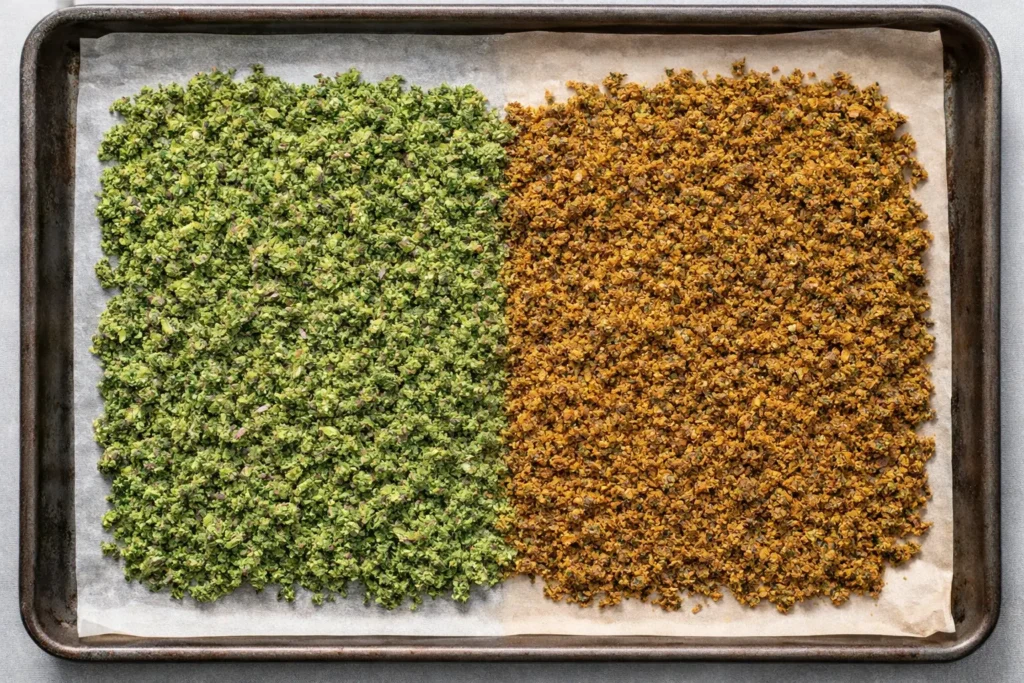
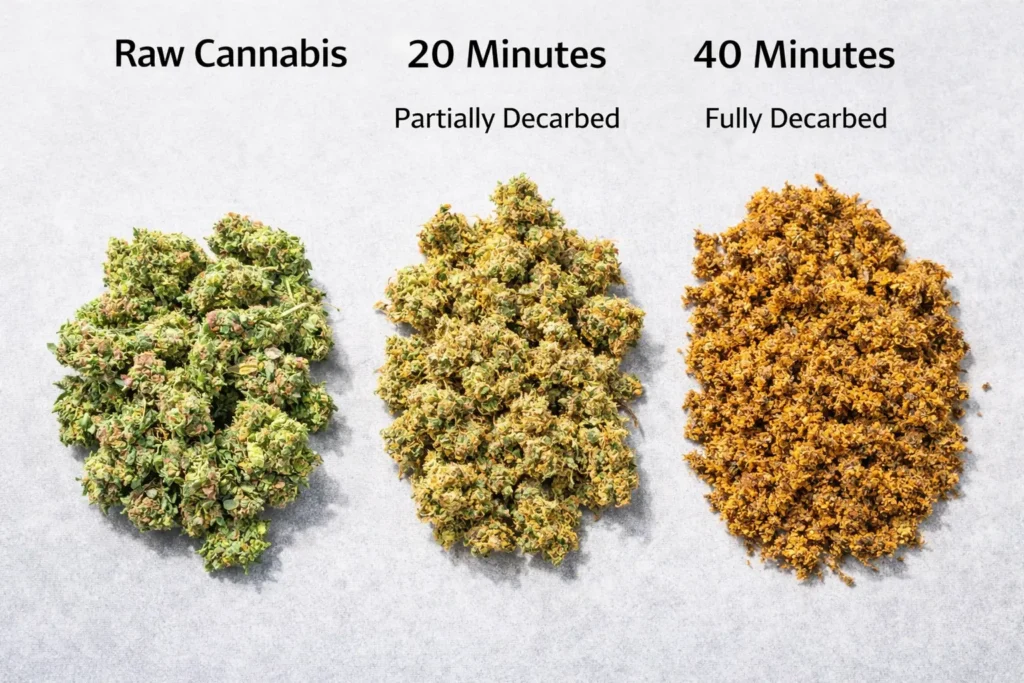
Place the baking sheet in the preheated oven. Bake for 30-40 minutes, stirring gently every 10-15 minutes to ensure even heating. Your cannabis should turn from bright green to golden brown or light tan.
Step 5: Cool
Remove from oven and let cool completely before using. The cannabis will be dry and crumbly, which is perfect for infusion.
Important Notes:
- Your kitchen will smell like cannabis during this process
- Don’t exceed 250°F or you’ll start degrading cannabinoids
- If cannabis turns very dark brown or black, you’ve overheated it
- Store decarbed cannabis in an airtight container if not using immediately
How to Make Cannabutter
Cannabutter is the most popular cannabis infusion method because butter works in countless recipes from brownies to pasta dishes.
What You’ll Need:
- 7-10 grams decarboxylated cannabis
- 1 cup (2 sticks) unsalted butter
- 2 cups water
- Medium saucepan or slow cooker
- Fine mesh strainer or cheesecloth
- Heat-resistant bowl or container
- Spoon for stirring
Step-by-Step Instructions:
Step 1: Combine Ingredients
Add butter and water to your saucepan. The water prevents the butter from burning and helps extract cannabinoids. Bring to a low simmer over low heat.
Step 2: Add Decarbed Cannabis
Once butter has melted, add your decarboxylated cannabis. Stir to combine thoroughly.
Step 3: Simmer
Maintain a very low simmer (not a boil) for 2-3 hours. The mixture should have small bubbles but never reach a rolling boil. Stir every 20-30 minutes. Keep the temperature between 160-180°F if you have a thermometer.
Step 4: Strain
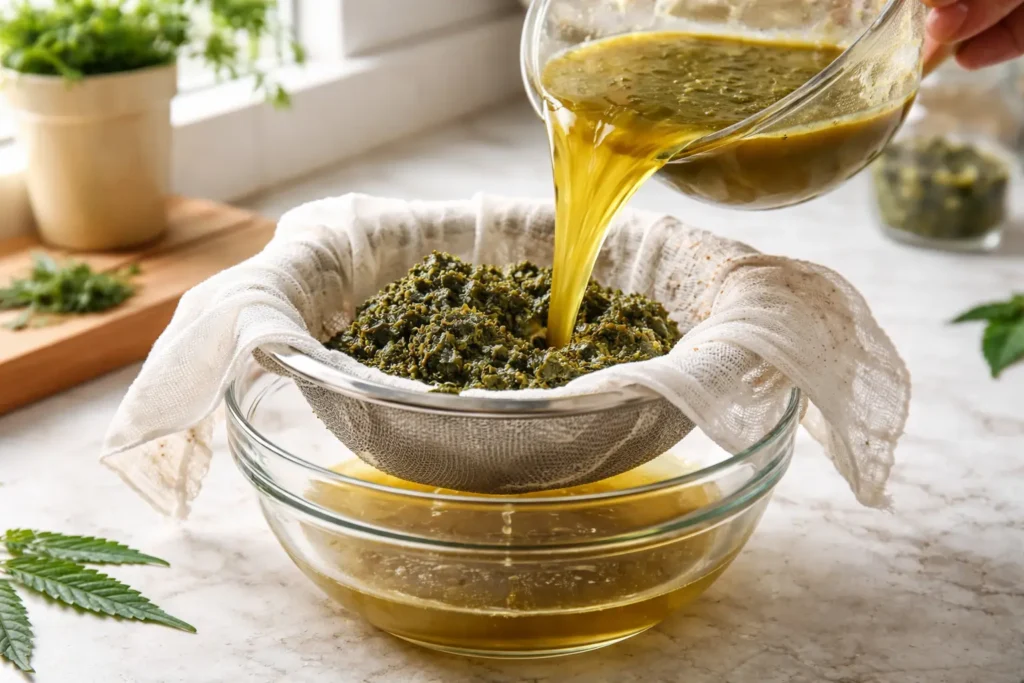
Place your strainer or cheesecloth over a heat-resistant bowl. Carefully pour the butter mixture through, catching the liquid and leaving plant material behind. Press the plant material gently to extract remaining butter, but don’t squeeze too hard or you’ll add chlorophyll and plant matter.
Step 5: Separate
Refrigerate the strained liquid for at least 2 hours. The butter will solidify on top while the water remains underneath. Once solid, lift out the cannabutter disk and discard the water.
Step 6: Store
Store cannabutter in an airtight container in the refrigerator for up to 2 weeks, or freeze for up to 6 months.
Tips:
- Use unsalted butter for better flavor control in recipes
- The water will be dark green or brown, this is normal
- Start with a test batch using less cannabis to gauge potency
- Label your cannabutter clearly with the date and estimated strength
How to Make Cannabis-Infused Oil
Cannabis-infused oil offers a versatile, dairy-free alternative to butter. Coconut oil is most popular due to its high fat content, but olive oil and vegetable oil work too.
What You’ll Need:
- 7-10 grams decarboxylated cannabis
- 1 cup coconut oil (or oil of choice)
- Slow cooker or double boiler
- Fine mesh strainer or cheesecloth
- Glass jar with lid for storage
- Spoon for stirring
Step-by-Step Instructions:
Step 1: Combine Oil and Cannabis
Add coconut oil to your slow cooker or double boiler. Heat until melted (if using coconut oil). Add decarboxylated cannabis and stir thoroughly.
Step 2: Infuse on Low Heat
Set slow cooker to low or maintain double boiler at a gentle simmer. Keep temperature between 160-180°F. Infuse for 4-6 hours, stirring every hour. Longer infusion times create stronger oil, but don’t exceed 8 hours.
Step 3: Strain
Set up your strainer or cheesecloth over a glass jar. Pour the oil mixture through, removing all plant material. Let gravity do most of the work rather than squeezing.
Step 4: Cool and Store
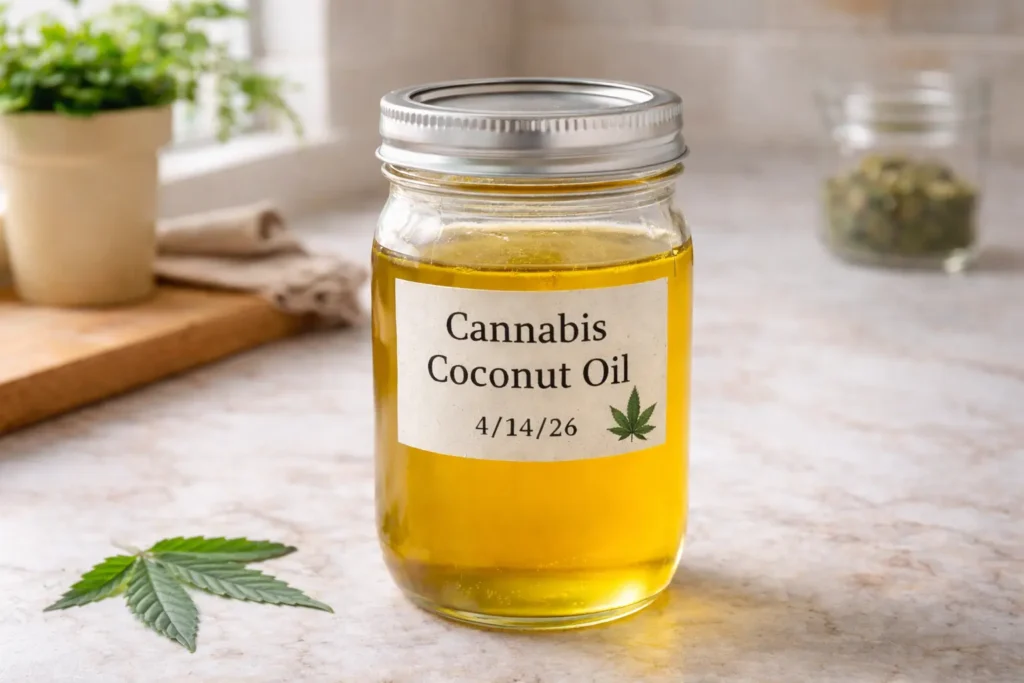
Allow oil to cool to room temperature before sealing. Store in a cool, dark place or refrigerate. Cannabis-infused coconut oil lasts 2-3 months when properly stored.
Usage Tips:
- Substitute cannabis oil for regular oil in any recipe
- Start with small amounts to test potency
- Coconut oil solidifies when cold, making it easy to measure
- Olive oil stays liquid, perfect for salad dressings and sauces
- Add to coffee, smoothies, or drizzle over finished dishes
How to Make Edibles With Tinctures
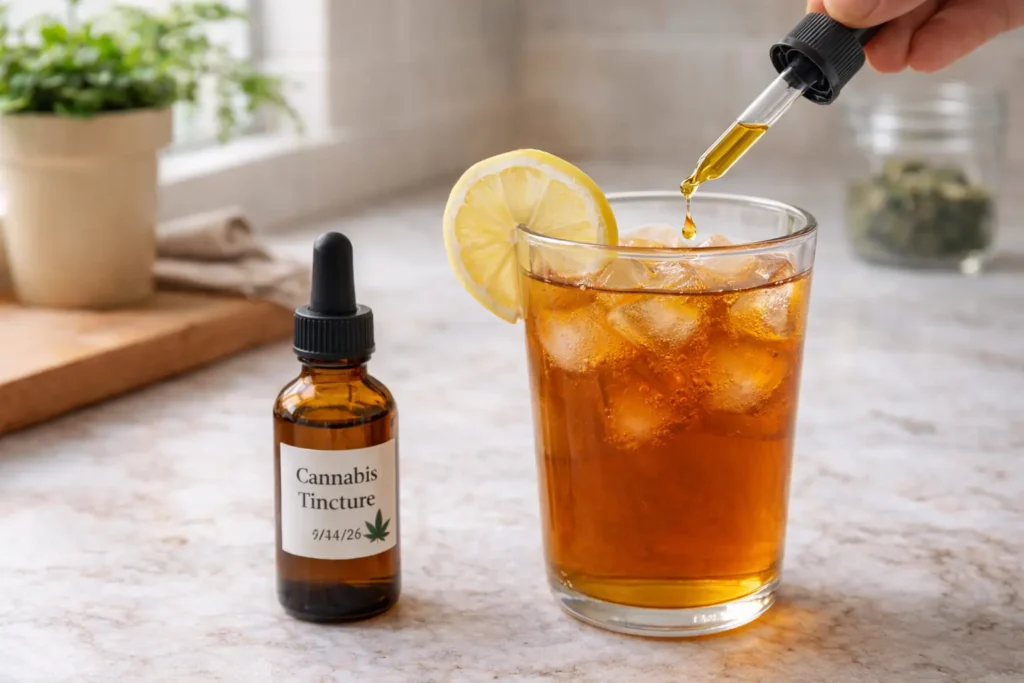
Cannabis tinctures offer the easiest edible-making method with zero cooking required. Tinctures are alcohol-based cannabis extracts that you can add directly to food or drinks.
What Makes Tinctures Different: Tinctures are already decarboxylated and ready to use. Simply add drops to finished foods or beverages. This method gives you precise dosing control and works for people who don’t want to cook.
How to Use Tinctures:
- For Drinks:Add tincture to juice, smoothies, coffee, tea, or cocktails. Stir thoroughly to distribute evenly. The alcohol base mixes well with most liquids.
- For Foods:Add tincture to sauces, dressings, syrups, or any dish after cooking. Never add tinctures during cooking or baking, as heat will evaporate the alcohol and degrade cannabinoids.
- Dosing With Tinctures Most tinctures label their THC content per dropper or milliliter. Calculate your desired dose and measure accordingly. Start with 2.5-5mg THC if you’re new to edibles.
Best Uses:
- Pasta sauces (add after heating)
- Salad dressings
- Beverages of all types
- Dessert toppings
- Already-baked goods (brush on top)
Advantages:
- No smell during preparation
- Precise dosing is easier
- Faster than making infused butter or oil
- Longer shelf life than butter-based edibles
- No straining or filtering required
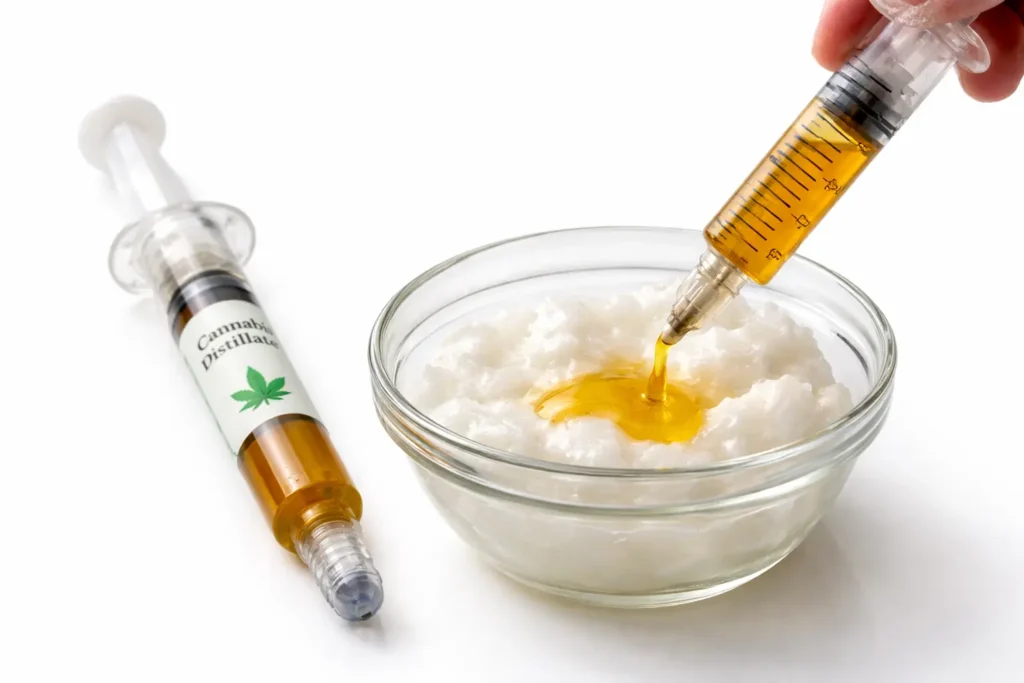
How to Make Edibles With Distillate
Cannabis distillate is a highly concentrated, flavorless extract perfect for edibles when you want THC without cannabis taste.
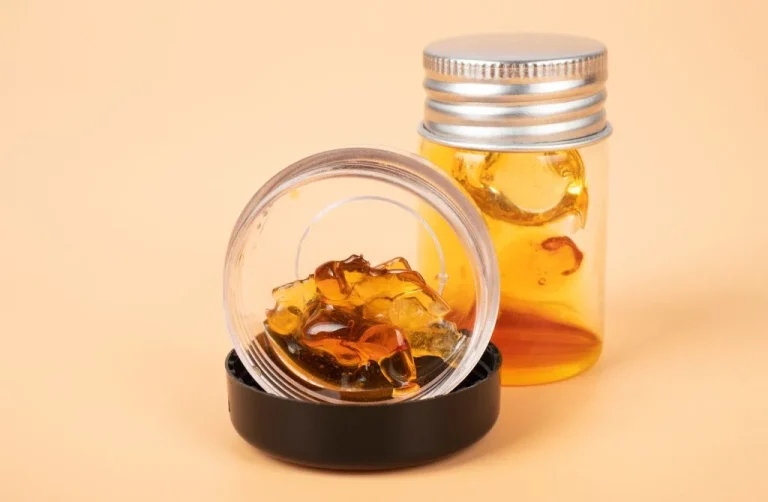
What Is Distillate: Distillate is cannabis extract refined to isolate specific cannabinoids (usually THC or CBD). It contains 80-95% cannabinoid content, making it extremely potent. The refinement process removes terpenes, resulting in a tasteless, odorless product.
How to Use Distillate:
- Method 1: Direct Addition. For very hot liquids (soups, coffee, hot chocolate), add distillate directly and stir until fully dissolved. The heat helps it mix.
- Method 2: Oil Mixing. Warm your distillate in a bowl of hot water until it becomes liquid. Mix with cooking oil (2-3 parts oil to 1 part distillate). Microwave for 10-15 seconds and stir thoroughly. Use this mixture in any recipe calling for oil.
- Dosing With Distillate: Distillate syringes typically show THC percentage. If you have 90% THC distillate, 1 gram contains 900mg THC. Measure carefully with the syringe markings. Start with a rice grain-sized amount (roughly 5-10mg THC).
Best Uses:
- Gummies and candies (no plant taste)
- Beverages
- Baked goods where cannabis flavor isn’t desired
- Savory dishes
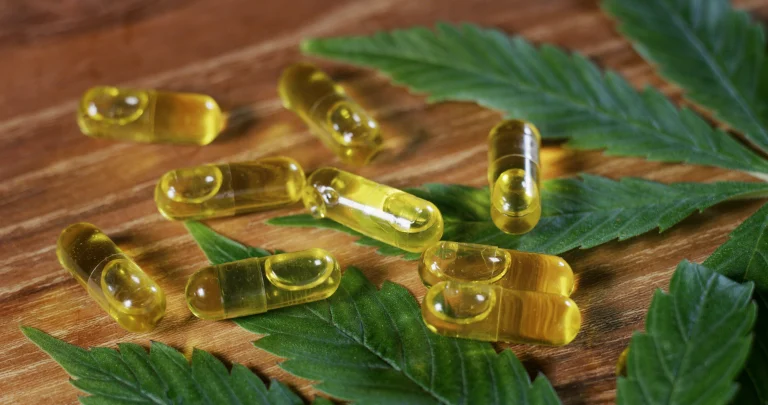
- Capsules for precise dosing
Advantages:
- No cannabis taste or smell
- Extremely potent (use less product)
- Already activated (no decarboxylation needed)
- Consistent dosing
- Longer shelf life
How to Dose Homemade Edibles
Proper dosing prevents overwhelming experiences and helps you find your ideal therapeutic or recreational level.
Start Low and Go Slow
First-time edible users should start with 2.5-5mg THC. Wait at least 2 hours before considering more. Edibles take 30-90 minutes to kick in, and effects last 4-8 hours. Taking too much creates an uncomfortably intense experience that you can’t stop once it starts.
Calculating Potency
If you know your cannabis THC percentage, you can estimate edible potency:
- Start with your cannabis amount in milligrams (1 gram = 1,000mg)
- Multiply by THC percentage (20% THC = 0.20)
- Account for infusion efficiency (roughly 60-80%)
Example: 7 grams of 20% THC cannabis
- 7,000mg × 0.20 = 1,400mg total THC
- 1,400mg × 0.70 (70% efficiency) = 980mg usable THC
If you make one cup of butter with this, each tablespoon contains roughly 60mg THC (980mg ÷ 16 tablespoons).
Testing Your Batch
Make a test edible using 1 teaspoon of your infusion. Wait 2 hours and evaluate effects. This helps you understand potency before making a large batch.
General Guidelines:
- Beginners: 2.5-5mg THC
- Occasional users: 5-10mg THC
- Regular users: 10-20mg THC
- High tolerance: 20-50mg THC
- Medical patients: Consult with doctor, often 10-30mg
For detailed dosing information and a calculator, visit our edible dosage calculator and complete THC edible dosing guide.
How to Store Cannabis Edibles
Proper storage extends shelf life and maintains potency. Storage methods vary by edible type.
Refrigerated Storage
Cannabutter, cannabis oil, and most homemade edibles should be refrigerated. Store in airtight containers to prevent odor transfer and moisture loss.
- Cannabutter: 2 weeks refrigerated, 6 months frozen
- Cannabis oil: 2-3 months refrigerated
- Baked goods: 5-7 days refrigerated, 3 months frozen
- Gummies: 1-2 weeks refrigerated in airtight container
Freezer Storage
Freezing extends shelf life significantly. Wrap items tightly in plastic wrap, then place in freezer bags. Remove as much air as possible to prevent freezer burn.
Room Temperature Storage
Hard candies, some gummies, and certain baked goods can be stored at room temperature if consumed within a few days. Keep in airtight containers away from heat and light.
Best Practices:
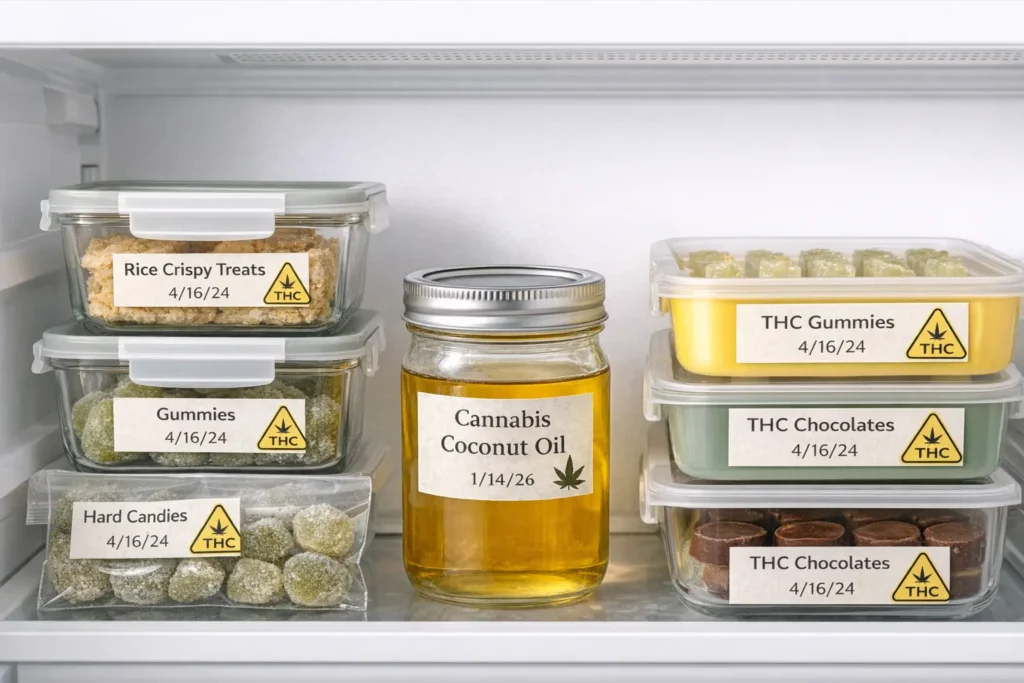
- Label everything with creation date and estimated THC content
- Store away from regular food to prevent accidental consumption
- Use child-proof containers if children are present
- Keep in opaque containers, as light degrades THC
- Never store where pets can access
Cannabinoids degrade over time, even when properly stored. Edibles lose roughly 10-20% potency after several months. For best results, consume within 1-2 months.
Ready to Start Making Your Own Edibles?
Get your medical marijuana card to access quality cannabis for your homemade edibles. Elevate Holistics makes getting your MMJ card simple with a 100% online process that takes just minutes.
FAQs About Making Edibles
What are edibles?
Edibles are cannabis-infused foods and beverages that deliver THC, CBD, and other cannabinoids through digestion rather than inhalation. Common types include baked goods, gummies, chocolates, beverages, savory foods, and capsules.
Unlike smoking or vaping, edibles must pass through your digestive system and liver, where THC converts to the more potent 11-hydroxy-THC, creating stronger and longer-lasting effects.
How long do edibles stay in your system?
Edibles can stay in your system for 1-30 days depending on usage frequency, metabolism, body fat percentage, and the sensitivity of drug tests. Occasional users typically test positive for 1-3 days, while regular users may test positive for up to 30 days or longer.
THC from edibles is stored in fat cells and released slowly over time, making detection windows longer than for inhaled cannabis.
How long do edibles take to kick in?
Edibles typically take 30-90 minutes to produce noticeable effects, though onset can vary based on your metabolism, whether you’ve eaten recently, and the type of edible. Effects peak around 2-4 hours after consumption and can last 4-8 hours total.
Factors like body weight, tolerance, and stomach contents influence timing, which is why you should always wait at least 2 hours before taking more.
Do edibles expire?
Yes, edibles expire at different rates depending on their ingredients and storage conditions. Baked goods last 5-7 days refrigerated or 3 months frozen, while gummies last 1-2 weeks refrigerated.
Hard candies can last several months at room temperature in airtight containers, and cannabutter keeps for 2 weeks refrigerated or 6 months frozen. THC potency also degrades over time, losing roughly 10-20% strength after several months even when properly stored.
Do edibles show up in drug tests?
Yes, edibles show up on drug tests just like smoked or vaped cannabis. Drug tests detect THC metabolites (THC-COOH) in your system, which are produced whether you smoke, vape, or consume edibles.
Edibles may actually cause longer detection windows because the digestive process creates more metabolites that stay in your system longer. If you face drug testing for employment, legal, or other reasons, avoid all forms of cannabis including edibles.
Can you overdose on edibles?
You cannot fatally overdose on cannabis edibles, but you can consume too much and experience extremely uncomfortable effects including anxiety, paranoia, rapid heart rate, nausea, and disorientation. These symptoms, while distressing, are temporary and will pass as your body metabolizes the THC.
The biggest risk comes from consuming too much before the first dose kicks in, so always wait at least 2 hours before taking more. If you consume too much, stay calm, drink water, rest in a safe place, and remember the effects will end.