


Table of Contents
ToggleYes, you can get a medical marijuana card for anxiety in select states where anxiety disorders qualify as approved conditions. Five states explicitly list anxiety, while several others allow physician discretion.
If you’re interested in getting an MMJ card for anxiety, understanding your state’s specific requirements is the critical first step. Getting certified is more accessible than most people realize, especially with online evaluations now available in most states. The key is knowing whether your particular anxiety disorder qualifies and what documentation you’ll need.
This guide breaks down exactly which states accept anxiety, what types of anxiety disorders qualify, and what documentation requirements look like across different programs. You’ll learn the difference between states with explicit anxiety provisions versus physician discretion models. We’ll also cover common qualification challenges and alternative pathways if anxiety doesn’t qualify in your state.
Does Anxiety Qualify for a Medical Marijuana Card?
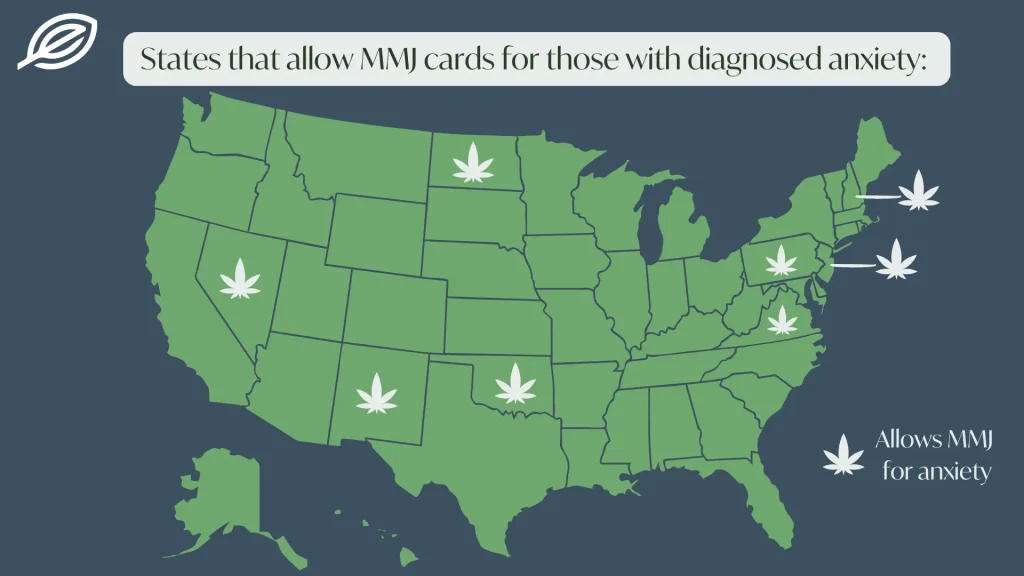
Yes. Anxiety qualifies for medical marijuana cards in a limited number of states including Pennsylvania, New Jersey, Nevada, North Dakota, and New Mexico. These states explicitly list anxiety disorders or generalized anxiety disorder as qualifying conditions in their medical cannabis programs.
The key is understanding your state’s specific requirements. Only five states explicitly list anxiety disorders on their qualifying condition lists. However, additional states like Oklahoma, Virginia, and Missouri operate under physician discretion models, meaning doctors can recommend medical cannabis for anxiety even when it’s not explicitly listed. States like Pennsylvania specifically require a diagnosis of generalized anxiety disorder (GAD), while others accept a wider range of anxiety-related conditions including social anxiety disorder and panic disorder.
Most states with medical marijuana programs do not accept anxiety as a qualifying condition. Many states only recognize PTSD (post-traumatic stress disorder) for mental health conditions, while excluding other anxiety disorders. This means your ability to qualify depends entirely on where you live and which specific anxiety disorder you’ve been diagnosed with.
Ready to see if you qualify? Elevate Holistics can help you determine whether anxiety is a qualifying condition in your state and connect you with a licensed medical marijuana doctor for certification.
Which States Allow Medical Cards for Anxiety Disorders?
Currently, these states explicitly accept anxiety disorders for medical cannabis certification:
State | Anxiety Qualification | Specific Requirements |
Generalized Anxiety Disorder | Must have GAD diagnosis specifically | |
Anxiety | Broad anxiety disorder acceptance | |
Anxiety | Anxiety disorders qualify | |
Anxiety | Anxiety disorders qualify | |
Anxiety Disorder | Anxiety diagnosis required |
States with Physician Discretion (Anxiety Not Explicitly Listed):
State | How Anxiety May Qualify |
Physician can recommend for any condition | |
Physician can recommend for any condition | |
Psychiatric disorders with physician discretion | |
Any debilitating condition affecting major life activities | |
Other debilitating conditions as determined by physician | |
May qualify under “qualifying symptoms” provision |
It’s worth noting that qualification criteria vary significantly. Pennsylvania requires a diagnosis of generalized anxiety disorder specifically, while New Jersey accepts a broader range of anxiety-related conditions. States like Oklahoma and Virginia operate under physician discretion models, meaning your doctor can recommend medical cannabis for anxiety even though anxiety isn’t explicitly listed as a qualifying condition.
Many states accept PTSD as a qualifying condition, which shares significant overlap with anxiety disorders. If you have both anxiety and PTSD diagnoses, you may have more options for qualification. Always verify your state’s current qualifying conditions through official state medical marijuana program websites, as these lists are updated regularly.
Not sure if your state qualifies? Elevate Holistics offers online consultations in multiple states and can help you navigate your state’s specific requirements for anxiety-related medical marijuana certification.
What Types of Anxiety Disorders Qualify for Medical Cards?
Generalized anxiety disorder (GAD) is the most commonly accepted anxiety diagnosis for medical marijuana cards. States that accept anxiety typically recognize GAD as the primary qualifying condition, with patients experiencing persistent, excessive worry and anxiety symptoms for at least six months.
The main anxiety disorders that qualify for medical cannabis certification include:
- Generalized Anxiety Disorder (GAD): Chronic, excessive worry about everyday situations. This is explicitly listed in Pennsylvania, New York, and New Mexico programs. GAD must be diagnosed by a licensed psychiatrist, psychologist, or physician to qualify.
- Post-Traumatic Stress Disorder (PTSD): Nearly all medical marijuana states accept PTSD as a qualifying condition. While PTSD is technically classified separately from other anxiety disorders, it involves significant anxiety symptoms. Many patients with anxiety disorders also have PTSD diagnoses, which can provide an alternative pathway to qualification in states that don’t accept general anxiety.
- Social Anxiety Disorder: Some states accept social anxiety disorder under their anxiety disorder provisions. New Jersey programs have approved patients with social anxiety disorder diagnoses. The condition must be documented by a mental health professional and show significant impairment in daily functioning.
- Panic Disorder: States with broader anxiety acceptance may qualify panic disorder patients. The condition must involve recurrent, unexpected panic attacks and persistent concern about future attacks. Documentation requirements typically include diagnosis from a psychiatrist or licensed therapist plus treatment history.
State-specific requirements matter significantly. Pennsylvania’s program specifically states “generalized anxiety disorder” rather than accepting all anxiety types. This means patients with social anxiety disorder or panic disorder without a GAD diagnosis may not qualify in Pennsylvania, but could qualify in New Jersey where anxiety acceptance is broader.
Most states require that your anxiety disorder causes significant impairment in your daily life and that conventional treatments have been tried or considered. Simply experiencing occasional anxiety typically won’t meet the threshold for medical cannabis certification. Your diagnosing physician must document that your anxiety disorder is chronic, debilitating, or substantially limits major life activities.
What Documentation Do You Need for Anxiety Certification?
You need medical records showing an anxiety disorder diagnosis from a licensed healthcare provider. The good news is that most states don’t require years of documented treatment. A current diagnosis from your psychiatrist, therapist, or primary care physician is typically sufficient to proceed with medical marijuana certification.
Required Documentation:
Medical records with anxiety diagnosis. Your documentation must show a formal diagnosis of an anxiety disorder from a licensed mental health professional or physician. The diagnosis should include the specific type of anxiety (generalized anxiety disorder, panic disorder, social anxiety disorder, or PTSD). Many states accept diagnoses from psychiatrists, licensed clinical psychologists, therapists, or primary care physicians who have evaluated you for anxiety.
Proof of state residency. You’ll need a valid driver’s license, state ID, or utility bill showing your current address in the state where you’re applying. Most states require you to be a legal resident for at least 30 days before qualifying for a medical marijuana card.
Government-issued identification. A current driver’s license or state ID card is required for identity verification. Some states also accept passports or military IDs.
Helpful But Not Always Required:
Prescription history for anxiety medications. If you’ve tried SSRIs, benzodiazepines, or other anxiety medications, bring records of these prescriptions. This documentation strengthens your application by showing conventional treatment attempts, though most states don’t mandate that you’ve failed other treatments before trying medical cannabis.
Treatment history and therapy records. Notes from your therapist, counselor, or psychiatrist documenting your anxiety symptoms and treatment progress can support your application. These records aren’t always required but may help in states with stricter qualifying criteria.
Diagnostic assessment results. If you’ve completed anxiety screening assessments like the GAD-7 questionnaire or other clinical evaluations, include these with your documentation. They provide objective measures of your anxiety severity.
States vary significantly in documentation requirements. Pennsylvania requires established patient relationships with diagnosing physicians, meaning you typically can’t get a diagnosis and certification in a single appointment. New Jersey allows medical marijuana doctors to diagnose and certify anxiety during your initial evaluation.
Oklahoma represents the most flexible approach, requiring only that a licensed physician believes medical marijuana would benefit your condition. You don’t need extensive prior documentation or long treatment histories in physician-discretion states.
If you don’t currently have an anxiety diagnosis, you’ll need to see a mental health professional first to obtain formal documentation before proceeding with medical marijuana certification. Many telehealth platforms now offer mental health evaluations specifically for patients seeking medical cannabis cards, though you should ensure any diagnosis is legitimate and based on a thorough clinical evaluation.
Need help gathering documentation or getting certified? Elevate Holistics can guide you through your state’s documentation requirements and connect you with licensed physicians who specialize in medical marijuana evaluations for anxiety disorders.
Bottom Line: Getting Your Medical Card for Anxiety
Yes, you can get a medical marijuana card for anxiety in select states where anxiety disorders qualify as approved conditions. Only five states explicitly list anxiety (Pennsylvania, New Jersey, Nevada, North Dakota, and New Mexico), though several additional states allow physician discretion for anxiety qualification.
Generalized anxiety disorder is the most widely accepted form, though some states also accept social anxiety disorder, panic disorder, and PTSD as qualifying conditions. Your ability to qualify depends entirely on your state’s medical marijuana program and whether anxiety appears on the qualifying condition list or falls under physician discretion provisions.
Most states with medical marijuana programs do not accept anxiety as a qualifying condition. If anxiety doesn’t qualify in your state, consider whether you have other qualifying conditions like chronic pain, insomnia, or PTSD that might provide an alternative pathway to medical cannabis certification.
For state-specific guidance on qualifying with anxiety and current program requirements, consult your state’s official medical marijuana program website or speak with certified medical marijuana evaluation services that operate in your state. They can provide current information on your state’s specific requirements and help determine your eligibility for medical cannabis certification.
Start your medical marijuana evaluation today. Elevate Holistics offers fast, affordable online consultations with licensed physicians in multiple states. Get certified from home and find out if you qualify for a medical marijuana card for anxiety. Contact us today!
FAQs About Getting a Medical Card for Anxiety
Can you get a medical card for social anxiety disorder?
Yes, you can get a medical card for social anxiety disorder in states with broad anxiety disorder acceptance like New Jersey and Nevada. States that only accept generalized anxiety disorder specifically, like Pennsylvania, may not approve social anxiety disorder alone. If your state doesn’t accept social anxiety disorder, check whether your symptoms might qualify under PTSD criteria, which is accepted in nearly all medical marijuana states.
What happens if your medical card application for anxiety gets denied?
If your medical card application for anxiety gets denied, you’ll receive notification from your state explaining the reason for denial. Common denial reasons include insufficient medical documentation, anxiety not being a qualifying condition in your state, or incomplete application information. You can typically reapply after addressing the denial reason, such as obtaining more comprehensive medical records or getting a formal diagnosis from a licensed provider.
Do you need a prior anxiety diagnosis to get a medical card?
No, you don’t always need a prior anxiety diagnosis to get a medical card, though requirements vary by state. Oklahoma, Virginia, and Missouri allow medical marijuana doctors to diagnose anxiety during your certification appointment, meaning you can receive both diagnosis and certification in a single visit. However, Pennsylvania and several other states require established patient relationships with your diagnosing physician, meaning you need to see a mental health provider first to obtain an anxiety diagnosis.
Can you use a medical card from another state if you have anxiety?
No, you generally cannot use a medical card from another state if you have anxiety because medical marijuana reciprocity is limited. Only a handful of states accept out-of-state medical marijuana cards, and even those require you to be visiting temporarily rather than residing there. If you move to a new state, you’ll need to apply for a new medical marijuana card in your new home state.
Is telehealth certification for anxiety legitimate?
Yes, telehealth certification for anxiety is completely legitimate and approved in nearly all medical marijuana states. Telehealth medical marijuana evaluations are conducted by state-licensed physicians who are authorized to certify patients for medical cannabis programs. These video consultations provide the same level of medical evaluation as in-person appointments and result in valid physician certifications that states accept for medical card applications.
How often do you need to renew a medical card for anxiety?
You need to renew a medical card for anxiety annually in most states, though renewal periods vary from 6 months to 3 years depending on your location. Most medical marijuana programs require both physician recertification and state registration renewal each year. Pennsylvania and New Jersey use one-year certification periods, meaning you’ll schedule a renewal consultation with a medical marijuana doctor every 12 months.
Does insurance cover medical marijuana cards for anxiety?
No, insurance does not cover medical marijuana cards for anxiety because cannabis remains federally illegal. Health insurance companies cannot cover any aspect of medical marijuana programs, including physician consultations, certifications, state application fees, or cannabis products from dispensaries. You’ll pay all medical card expenses out of pocket.